Choosing the best CRM for a small business in the UAE, Saudi Arabia, or the wider MENA region involves more than simply selecting a popular global brand. Most "best of" lists are built for a Western context, fundamentally failing to address the realities of our market. They overlook the dominance of WhatsApp, the critical nuances of Arabic dialects, and the specific operational workflows of local clinics, B2B services, and real estate agencies.
A CRM that cannot seamlessly manage WhatsApp conversations or automate follow-ups in proper Arabic is not just inefficient; it is a direct barrier to growth. For those who need to brush up on the fundamentals before diving into platform specifics, a solid overview of Customer Relationship Management basics can provide helpful context.
This guide moves beyond generic feature lists to provide an authoritative, practical framework for evaluating CRMs based on what truly matters for MENA-based SMEs. We will analyse each platform's actual strengths in omnichannel communication (especially WhatsApp), its readiness for Arabic-speaking customers, and its overall value proposition for a business that needs to be lean, agile, and effective.
Throughout this comprehensive resource, we will compare 12 leading solutions, complete with screenshots and direct links. We will also examine how a localised, orchestrated approach, such as SMOrchestra’s SalesMfast AI, can deliver superior results much faster than a standard, do-it-yourself setup of a generic platform. This article is your definitive guide to finding a system that genuinely works for your business, not against it.
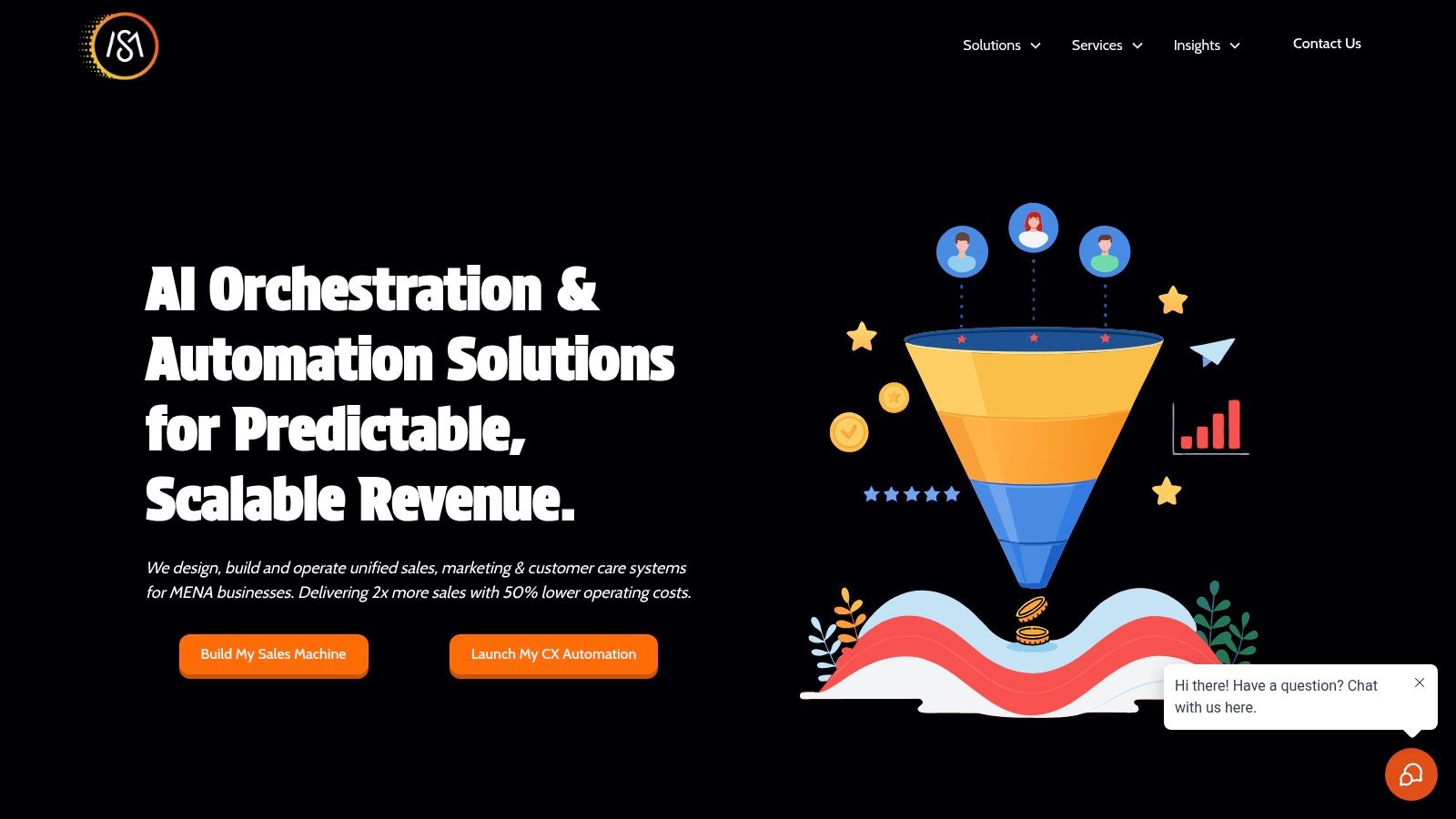
1. Smorchestra – AI Orchestration & Automation Solutions for Predictable, Scalable Revenue
Smorchestra’s SalesMfast AI platform is engineered for small to medium-sized businesses in the MENA region that require more than just a CRM. It's a complete, AI-orchestrated sales and marketing engine designed for rapid deployment and immediate impact. As a localized alternative to GoHighLevel (GHL), this solution is particularly powerful for SMEs who find traditional CRMs too complex or lacking in crucial localisations, such as native Arabic support and deep WhatsApp integration.
Instead of providing an empty software shell, SMOrchestra delivers a turnkey system. It comes pre-configured with industry-specific "snapshots"—pre-built automation workflows for clinics, B2B service firms, and e-commerce brands. This approach eliminates months of setup, allowing businesses to launch a sophisticated, multichannel follow-up system that unifies WhatsApp, SMS, email, and social media conversations into a single, automated pipeline.
Why It Stands Out
The core differentiator is the hands-on, outcome-driven model. SMOrchestra doesn’t just sell software; they implement, manage, and prove its ROI before handing over the keys. This is ideal for businesses without a dedicated tech team. The platform is finely tuned to solve regional challenges, automating up to 60% of inbound inquiries and dramatically increasing response times. By orchestrating communication channels that are often siloed, businesses can ensure no lead is left behind. You can learn more about how to unify your marketing channels effectively on their blog.
Key Features & Benefits
- Turnkey Deployment: Go live quickly with a fully configured system, complete with bilingual (Arabic/English) automation, lead capture forms, and appointment booking flows.
- True Multichannel Orchestration: Natively integrates WhatsApp, email, SMS, and social media messaging to engage leads on their preferred platforms.
- Proven ROI Model: The team runs the system for you until it achieves predefined goals, such as 5-20 booked calls per month or a 30-50% lift in lead-to-sale conversions.
- MENA-Specific Localisation: Tailored for regional business needs, from language to communication channel preferences, making it one of the best CRM for small business options in the UAE and Saudi Arabia.
Pros and Cons
Best For
This platform is the ideal choice for SMEs, clinics, and B2B teams in the MENA region seeking a fast, effective way to scale revenue without adding headcount. If your primary goal is to convert more inquiries into customers through automated, localised, and multichannel communication, Smorchestra’s SalesMfast AI provides the tools, strategy, and hands-on execution to make it happen.
Website: https://www.smorchestra.com/
2. HubSpot CRM
HubSpot CRM is a dominant force in the market, renowned for its "freemium" model that provides a powerful, no-cost entry point into the world of customer relationship management. It’s built on a modular "Smart CRM" platform, allowing businesses to start with the free core tools and then add paid "Hubs" for Marketing, Sales, Service, and Operations as they scale. This makes it an exceptionally good choice for startups and small teams that need an intuitive system they can set up quickly without a significant upfront investment.
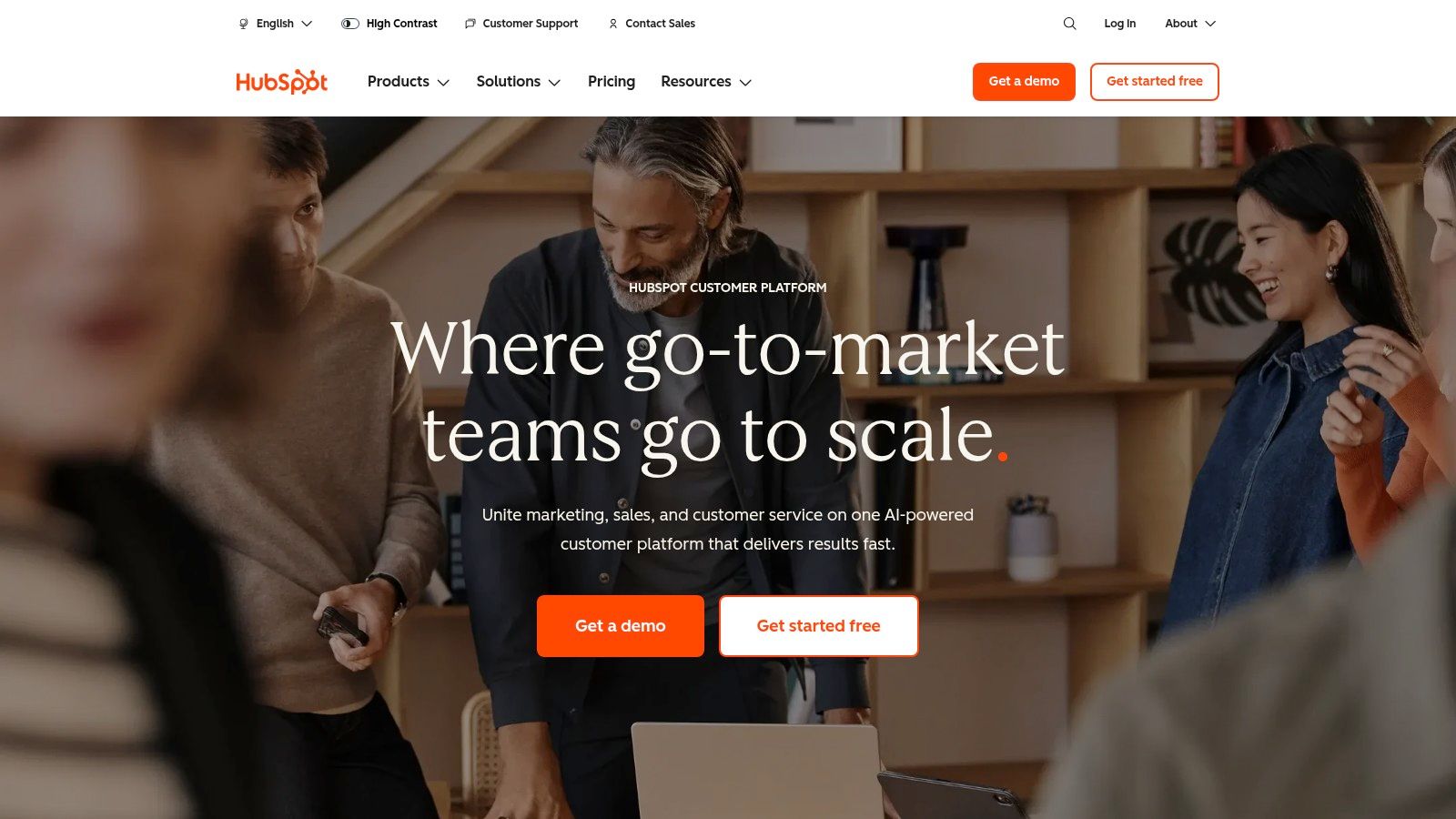
Its biggest draw is the unified nature of its ecosystem. All data from sales, marketing, and service activities lives in one place, providing clean, holistic reporting. For businesses in the UAE and Saudi Arabia, its seamless integrations with Google Workspace and Microsoft 365 are a major plus, as these are the default productivity stacks for most companies. The platform's real strength lies in its accessibility; with the extensive (and free) HubSpot Academy, new users can get up to speed very quickly.
However, MENA-based businesses should note that while HubSpot is powerful, advanced automation and native right-to-left (RTL) support for Arabic can be limitations. The costs can also escalate quickly as you move into the Professional and Enterprise tiers, where onboarding fees often apply. While it offers a fantastic foundation, achieving deep localisation for the MENA market, particularly for complex lead generation funnels, may require additional customisation. For companies looking to implement HubSpot CRM with tailored MENA workflows, SMOrchestra offers expert deployment and integration services.
- Best For: Startups and SMEs wanting a free, easy-to-use CRM that can scale with paid marketing and sales tools.
- Pros: Generous free plan, excellent user interface, extensive training resources, strong integration ecosystem.
- Cons: Paid tiers can become expensive, advanced automation is locked behind higher plans, and onboarding fees can be substantial.
- Website: https://www.hubspot.com
3. Zoho CRM
Zoho CRM is a powerhouse for small to medium-sized businesses, particularly known for its exceptional value and extensive customisation options. It serves as the central hub of the vast Zoho ecosystem, which includes over 50 integrated applications for finance (Zoho Books), customer support (Zoho Desk), and marketing (Zoho Campaigns). This all-in-one approach allows businesses to build a completely connected operational suite on a single platform, avoiding the complexities and costs of managing multiple disconnected software subscriptions.
The platform is particularly well-suited for businesses in the UAE and Saudi Arabia due to its strong regional focus. It offers localised pricing in AED and includes features like built-in VAT handling in Zoho Books, which integrates seamlessly with the CRM. This is a significant advantage for SMEs that need a system that understands and simplifies local tax and compliance requirements. Its highly customisable nature means it can be adapted to fit specific industry workflows, from real estate to healthcare.
However, the sheer breadth of Zoho's capabilities can be a double-edged sword. While powerful, the interface can feel less intuitive than some competitors, and new users may face a steeper learning curve. Additionally, some of the most impactful features, like the AI assistant Zia and advanced analytics, are reserved for the more expensive tiers. For businesses needing to integrate this robust system into a holistic B2B business development strategy, expert guidance is often required to unlock its full potential.
- Best For: SMEs that need a highly customisable, all-in-one platform with strong local financial and operational integrations.
- Pros: Competitive pricing, seamless integration with the huge Zoho app family, strong localisation for UAE/Saudi markets (AED pricing, VAT handling).
- Cons: The user interface can be complex for beginners, and support quality can vary on lower-tier plans.
- Website: https://www.zoho.com/crm
4. Salesforce (Starter / Sales Cloud)
Salesforce is arguably the most recognised name in the CRM industry, often perceived as a tool for large enterprises. However, its Starter Suite and Sales Cloud Professional editions are specifically designed to bring its enterprise-grade power to small and medium-sized businesses. This makes Salesforce an excellent choice for ambitious SMEs that anticipate rapid growth and need a platform that can scale with them without requiring a complete system change down the line. It provides a robust foundation for sales, service, and marketing in one unified package.
The platform's biggest advantage is its unparalleled customisability and the vast AppExchange ecosystem. This marketplace allows businesses to extend the core CRM functionality with thousands of third-party integrations, covering virtually any business need imaginable. For MENA businesses, this means you can connect specialised tools for local payment gateways, logistics, or compliance, creating a truly bespoke system. The built-in automation and AI capabilities, even in lower tiers, provide a significant competitive edge for optimising sales processes.
However, the power of Salesforce comes with a steeper learning curve and a higher price point compared to simpler solutions. While the Starter Suite is more accessible, costs can escalate as you add users or move to higher editions like Professional, which are often required for more advanced features. The standard annual contract model can also be a significant commitment for smaller businesses. For companies that need its robust capabilities but want to ensure it’s configured for optimal lead conversion, SMOrchestra provides expert services to build and integrate high-performance sales funnels within Salesforce.
- Best For: Ambitious SMEs and growing businesses that need a highly scalable and customisable platform.
- Pros: Industry-leading platform with deep customisation, massive integration ecosystem (AppExchange), and strong security.
- Cons: Can be complex and expensive to implement and scale, steeper learning curve, and typically requires annual contracts.
- Website: https://www.salesforce.com/sales/pricing/
5. Pipedrive
Pipedrive is a pipeline-centric CRM built for one primary purpose: to help salespeople sell more. Prized for its simplicity and rapid user adoption, it is an ideal choice for sales-led small businesses that need a system focused purely on deal management. Its main strength lies in its visual sales pipelines, where deals can be dragged and dropped between stages, offering an immediate and intuitive overview of the entire sales process. This visual approach strips away complexity, allowing teams to focus on activities that close deals.
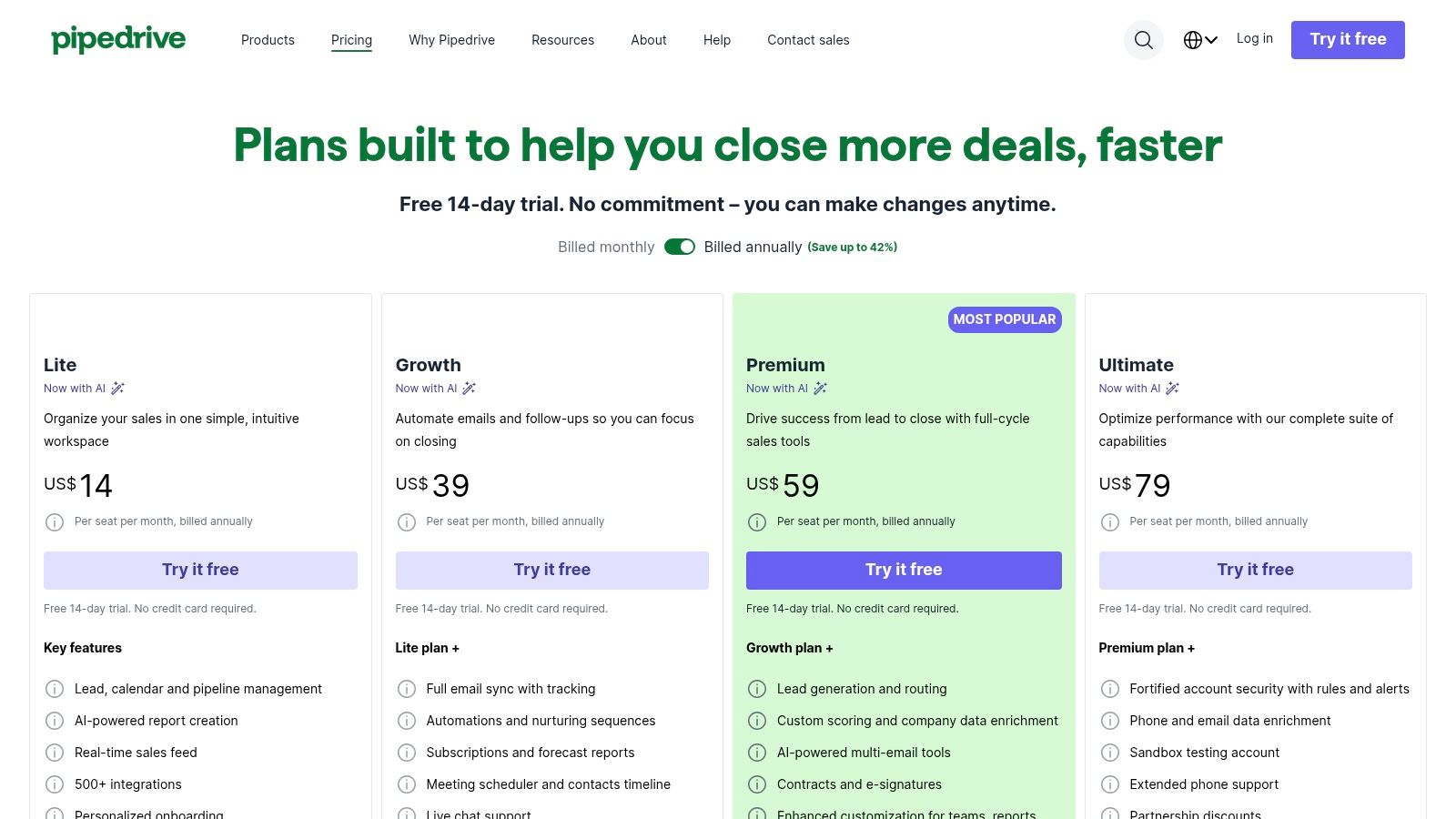
The platform is designed for action. Instead of getting bogged down in administrative tasks, users are prompted to schedule their next activity for every deal, ensuring no opportunity falls through the cracks. For small businesses in the UAE and Saudi Arabia, its extensive marketplace with over 500 integrations means it can connect to local tools easily. Pipedrive's straightforward approach makes it a powerful contender for the best CRM for small business teams who need to understand their sales funnels better. For an in-depth guide on sales funnels, explore our insights on what a sales funnel means and how to build one.
However, its laser focus on the sales pipeline is also its main limitation. Pipedrive is not an all-in-one marketing and service platform. Businesses needing comprehensive marketing automation or sophisticated customer support features will have to rely on integrations or purchase add-ons, which can increase the total cost. The pricing, while transparent with a 14-day free trial, is user-based, and costs can add up as the team grows, especially when advanced reporting or lead routing features are required from higher-tier plans.
- Best For: Sales-focused teams who need a simple, visual, and activity-based CRM to manage their deal pipeline.
- Pros: Very easy to learn with quick rollout, highly visual and intuitive pipeline interface, clear packaging and trial options.
- Cons: Primarily a sales tool with limited marketing/service features, some reporting and essential add-ons may cost extra depending on the plan.
- Website: https://www.pipedrive.com/pricing
6. Freshsales by Freshworks
Freshsales, part of the broader Freshworks ecosystem, is a sales-focused CRM designed for speed and simplicity. It stands out by integrating core communication channels like phone, email, and chat directly into the platform, making it an excellent all-in-one solution for small businesses that want to eliminate tool-switching. Its AI assistant, Freddy, provides deal insights and lead scoring, helping sales teams prioritise their efforts effectively and focus on the most promising opportunities.
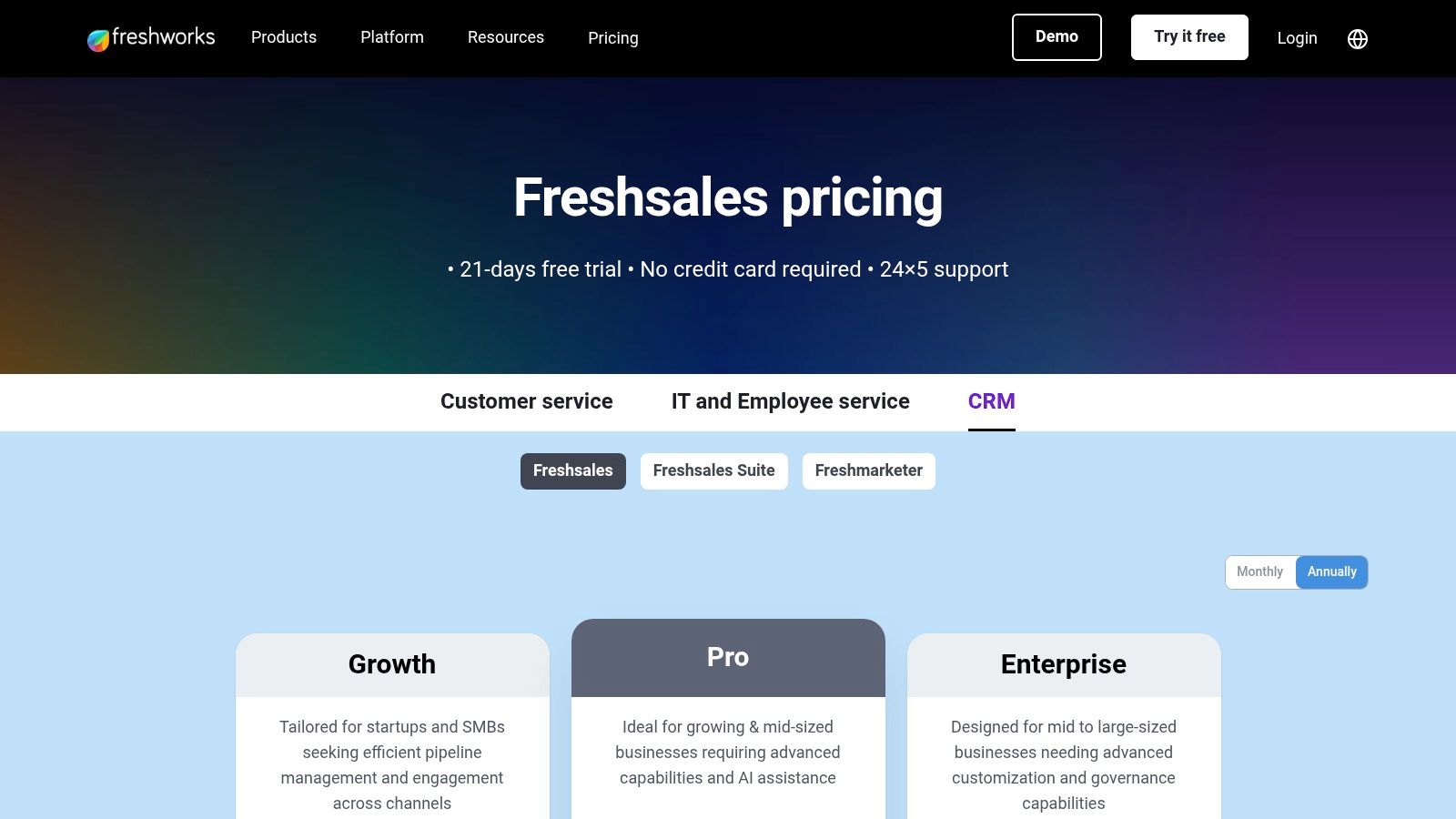
The platform is particularly well-suited for high-velocity sales teams that require built-in telephony and visual pipeline management. For MENA businesses, the short learning curve and competitive entry-level pricing are significant advantages, allowing for rapid adoption without a hefty initial investment. The visual Kanban-style deal pipeline provides a clear, at-a-glance overview of the entire sales process, which is a major plus for managing complex sales cycles common in the region.
While its core offering is strong, some of the more advanced analytics and AI-driven automation features are reserved for the higher-tier Pro and Enterprise plans. The free plan is a good starting point for up to three users, but growing teams will quickly need to upgrade to access essential sales sequences and deeper customisation. Nonetheless, for a small business looking for the best CRM that combines sales, communication, and AI in one affordable package, Freshsales is a compelling contender.
- Best For: SMEs and sales teams needing an integrated CRM with built-in phone, chat, and email functionalities.
- Pros: Competitive entry pricing, short learning curve, robust all-in-one communication tools, 24x5 support.
- Cons: Advanced AI features and in-depth analytics are locked behind more expensive tiers.
- Website: https://www.freshworks.com/crm/pricing/
7. monday sales CRM
monday sales CRM reimagines customer relationship management by building it on top of its highly visual and flexible Work OS platform. This approach makes it a standout option for process-driven teams that want to combine their CRM activities with light project management and task tracking in a single, unified workspace. Its board-based system allows small businesses to customise sales pipelines, contact management, and deal stages with simple drag-and-drop functionality, eliminating the need for code or complex configurations.
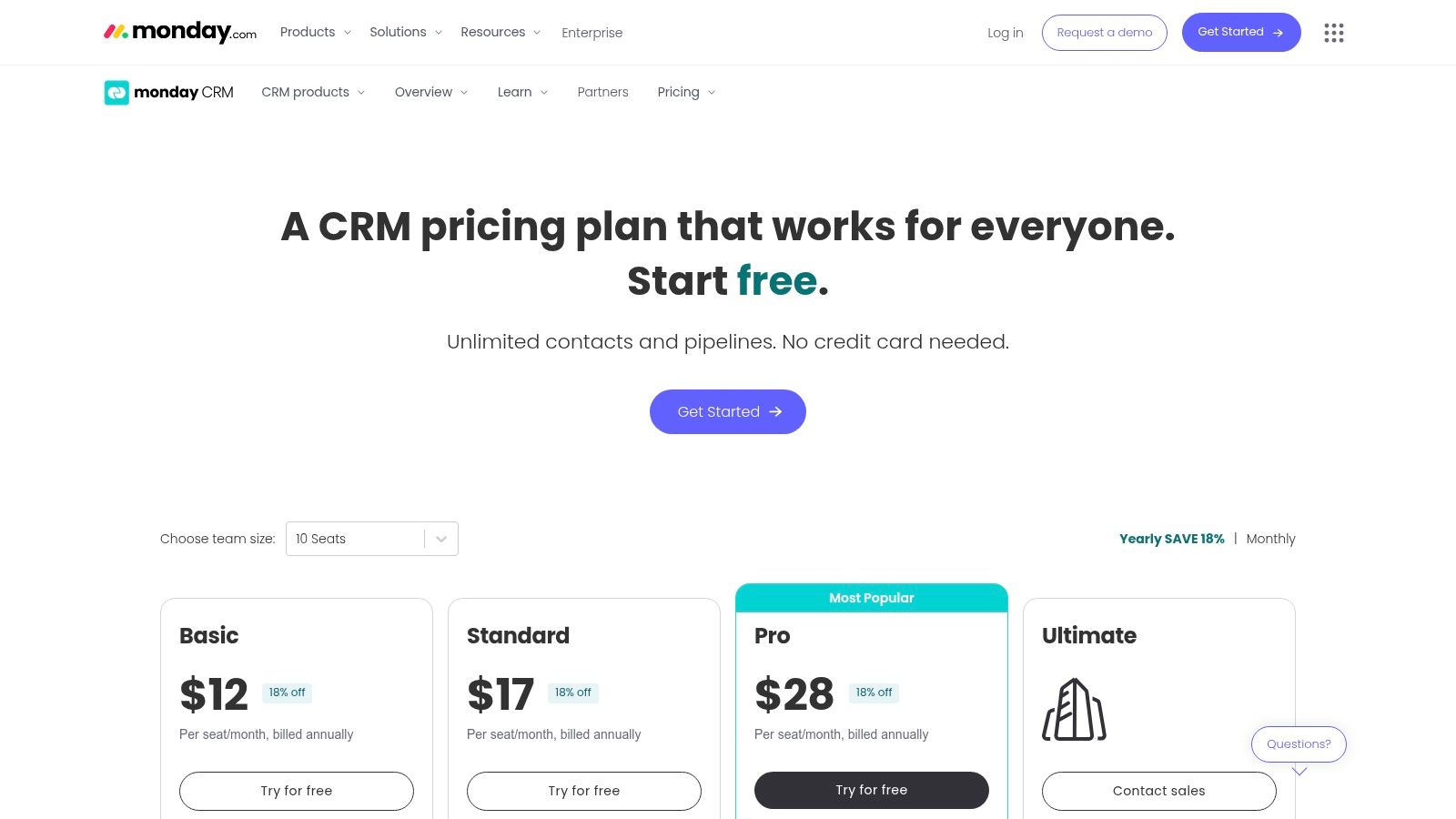
The platform is designed for teams that thrive on visual organisation. Features like unlimited customisable pipelines, two-way email sync, and helpful automations for activity management are built directly into its colourful interface. For businesses in the UAE and Saudi Arabia, this means you can visually map out your entire sales cycle, from lead capture to post-sale follow-ups, and automate repetitive tasks without needing a dedicated IT team. Its visual dashboards provide an at-a-glance overview of team performance, making it one of the best CRM for small business leaders who need clear, immediate insights.
However, a key consideration for MENA-based startups is its pricing model. Unlike some competitors, monday sales CRM does not offer a perpetual free plan; it provides a 14-day free trial, after which a paid plan is required. Furthermore, pricing is structured in seat bundles with a minimum number of users, which can be a hurdle for very small teams or solo entrepreneurs. While it offers powerful customisation, businesses must be prepared for the subscription cost from the outset.
- Best For: Teams that need a highly visual, customisable CRM integrated with project management and task tracking.
- Pros: Extremely intuitive and visual interface, powerful customisation without code, strong automation and integration capabilities.
- Cons: No permanent free tier (only a trial), pricing is based on seat bundles with a minimum user count.
- Website: https://monday.com/crm/
8. Microsoft Dynamics 365 Sales
For small businesses already embedded in the Microsoft ecosystem, Microsoft Dynamics 365 Sales offers a powerful and native integration experience. This platform is designed to work seamlessly with Microsoft 365, Teams, and Outlook, making it a natural extension for companies that run on Microsoft's productivity suite. Its user interface will feel familiar to anyone accustomed to Office applications, which significantly reduces the learning curve and encourages user adoption across sales teams.
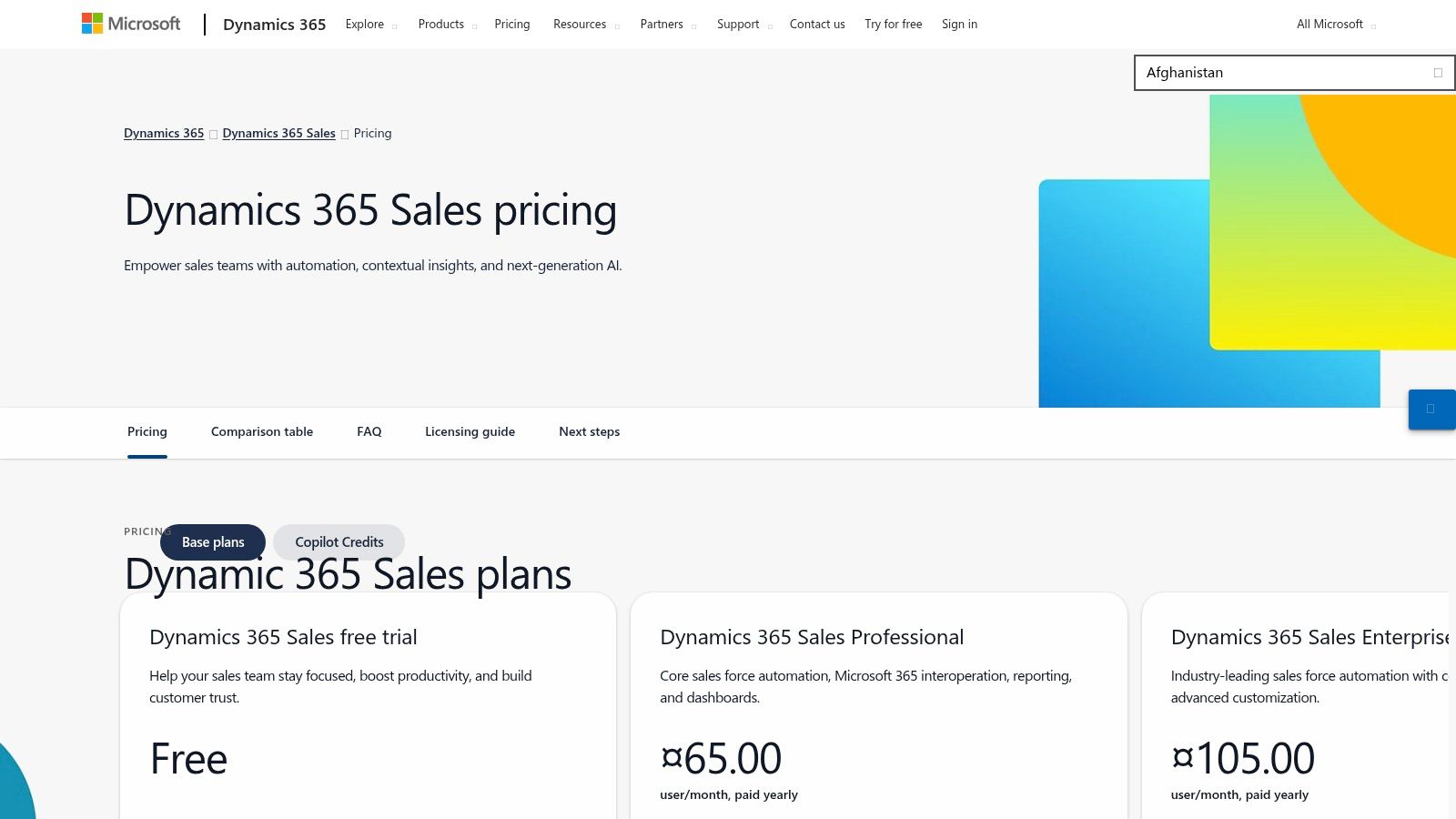
The platform's strength lies in its deep data connection and AI capabilities. With Copilot AI integrated across its plans, it provides intelligent insights, email assistance, and meeting summaries directly within the user's workflow. For businesses in the UAE and Saudi Arabia, the robust security, compliance, and governance features inherent in the Microsoft stack are a major advantage. Furthermore, its integration with the Power Platform (Power BI, Power Automate) allows for sophisticated customisation and automation beyond standard CRM functionalities.
However, Dynamics 365 can be a more premium option compared to other CRMs designed purely for the SMB market. The pricing structure often favours annual commitments, and while the base product is strong, unlocking advanced features like conversation intelligence requires moving to higher-priced tiers. The platform's true power is realised through configuration, making it less of an out-of-the-box solution and often requiring implementation support from a Microsoft partner to tailor it for specific MENA business processes.
- Best For: SMEs deeply invested in the Microsoft 365 ecosystem that need robust security and advanced AI-driven sales tools.
- Pros: Seamless integration with Microsoft 365/Teams, powerful AI with Copilot, strong security and compliance, and an extensive regional partner network.
- Cons: Higher starting price point than many SMB-focused CRMs, annual billing is common, and may require partner support for optimal setup.
- Website: https://www.microsoft.com/en/dynamics-365/products/sales/pricing
9. Bitrix24
Bitrix24 stands out as a comprehensive workspace solution, bundling CRM, project management, communications, and even a website builder into a single platform. Its most compelling feature for growing SMEs is its unique pricing model, which often uses flat, team-based fees rather than per-user charges. This makes it an incredibly cost-effective choice for businesses anticipating rapid headcount growth, as they can add users without exponentially increasing their monthly software bill. It offers a powerful free plan with unlimited users, making it accessible for any small team to get started.
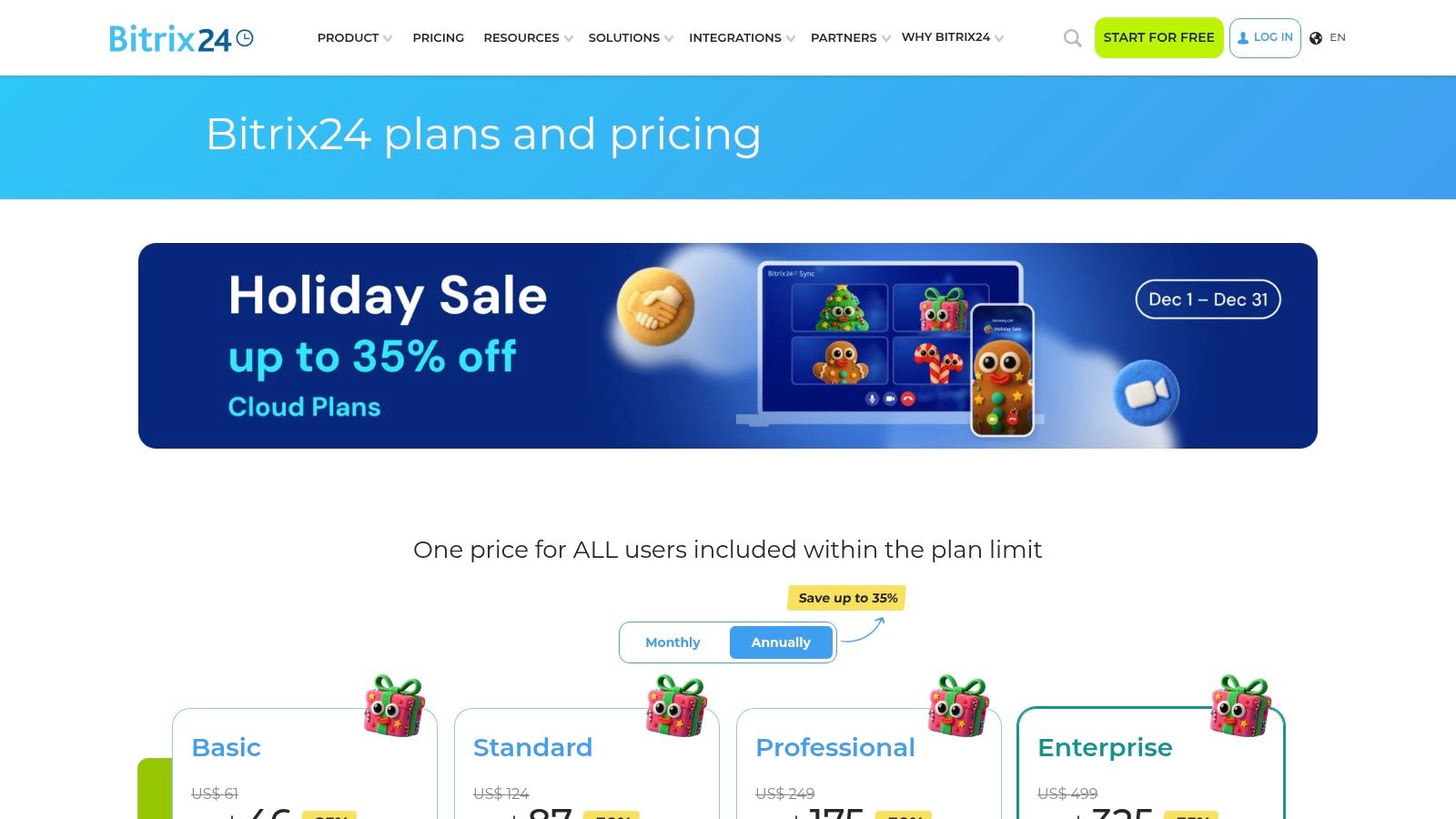
This "all-in-one" approach is Bitrix24's core strength. For a small business in the UAE or Saudi Arabia, it can replace multiple disparate tools, unifying tasks, calendars, documents, and customer data into one environment. The platform offers both cloud and on-premise versions, providing flexibility for companies with specific data sovereignty or security requirements. Features like multi-currency support and VAT-ready document generation are practical benefits for businesses operating across the GCC. It's a robust platform for those who want one system to manage nearly every aspect of their internal and external operations.
However, the sheer breadth of its features can also be its primary drawback. The user interface can feel cluttered and overwhelming for new users, often requiring a dedicated administrator to configure and maintain it effectively. While powerful, it lacks the intuitive, user-friendly feel of more modern, specialised CRMs. It’s the best CRM for a small business that values a wide feature set and predictable costs over a simple, streamlined user experience. Organisations needing help to harness its extensive capabilities can benefit from professional deployment services to ensure the setup aligns with their specific MENA business processes.
- Best For: SMEs that need a broad, all-in-one platform and want to avoid per-user pricing as they scale their team.
- Pros: Extremely cost-effective for larger teams due to flat pricing, very comprehensive feature set, and available as a cloud or on-premise solution.
- Cons: The interface can be complex and feel dated, the learning curve is steep, and it may require significant administrative effort to manage.
- Website: https://www.bitrix24.com/prices/
10. Odoo (CRM app)
Odoo positions itself not just as a CRM, but as an all-in-one suite of open-source business management applications. Its core strength lies in its modularity; you can start with just the CRM app and later integrate other functions like accounting, inventory, or project management from the same unified platform. This makes it a compelling choice for small businesses that anticipate future needs beyond customer relationship management and want a system that can evolve into a full-fledged ERP without messy migrations.
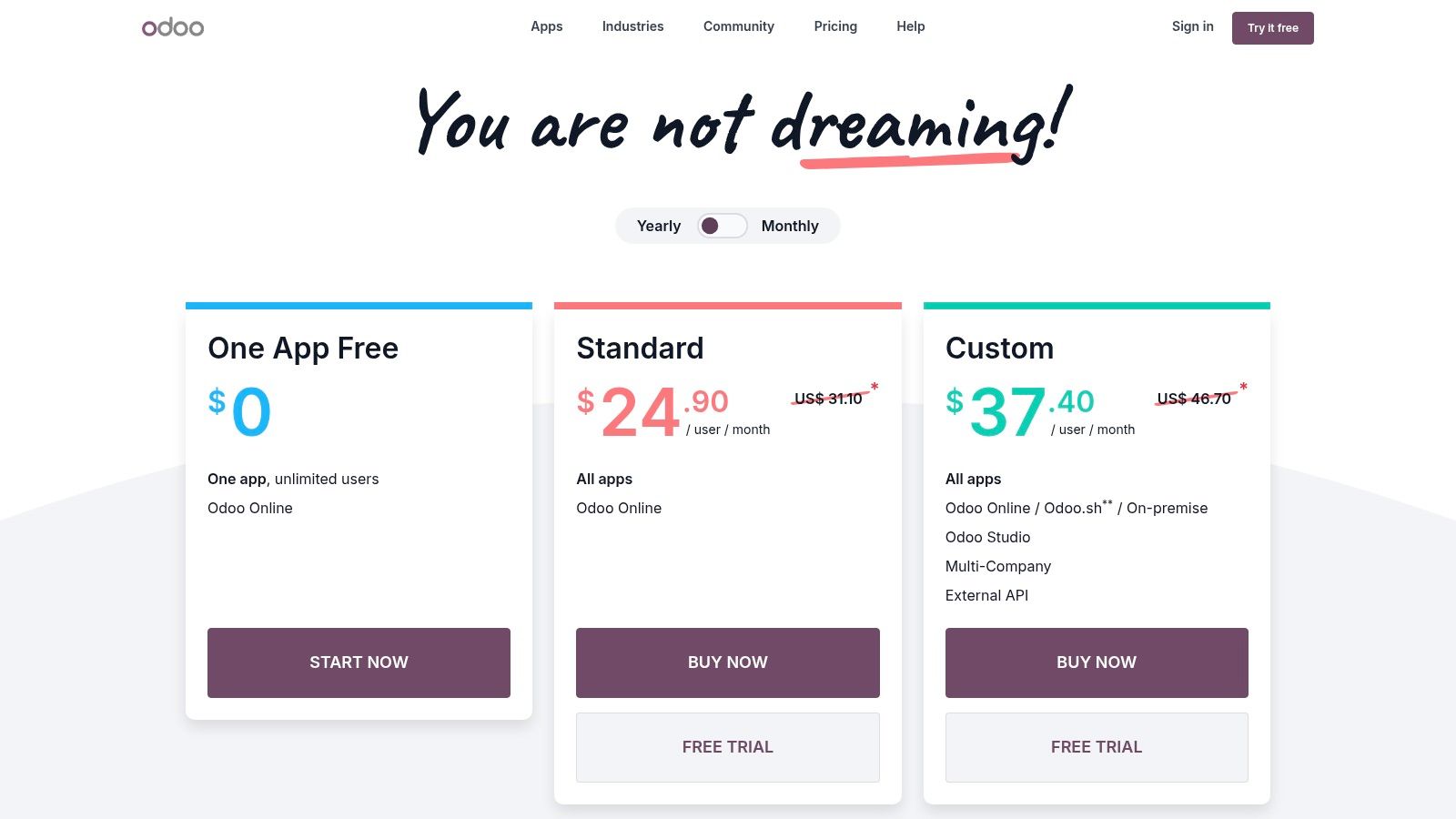
The platform's "One App Free" plan is a standout feature, allowing unlimited users to access a single application, like the CRM, at no cost. For SMEs in the UAE and Saudi Arabia, this provides an incredibly low-risk entry point. As your operational complexity grows, you can add more apps through their paid plans. Odoo’s flexibility extends to its deployment options, offering cloud, on-premise, or custom hosting, which is a critical advantage for businesses in the MENA region with specific data residency or security requirements.
However, the immense flexibility of Odoo can also be its main challenge. While the basic setup is straightforward, customising workflows or integrating multiple apps to fit specific MENA business processes often requires technical expertise or the help of an Odoo implementation partner. As you scale and add more modules, managing the system can become more complex than with a dedicated, out-of-the-box CRM. It's an excellent, forward-thinking choice if you're planning for long-term operational integration.
- Best For: SMEs that need a free or low-cost starting CRM with a clear path to an integrated ERP system.
- Pros: Generous "One App Free" plan, highly modular and customisable, flexible deployment options (cloud/on-premise), extensive app marketplace.
- Cons: Can become complex to manage as more apps are added, and advanced customisation often requires a development partner.
- Website: https://www.odoo.com/pricing
11. Insightly
Insightly carves out a unique space in the CRM market by tightly integrating project management directly into its core platform. This makes it an ideal choice for small businesses whose operations don’t just end with a sale but continue into post-sale delivery, client onboarding, or service implementation. Instead of juggling separate tools for sales and project execution, teams can manage the entire customer lifecycle from a single, unified pipeline.
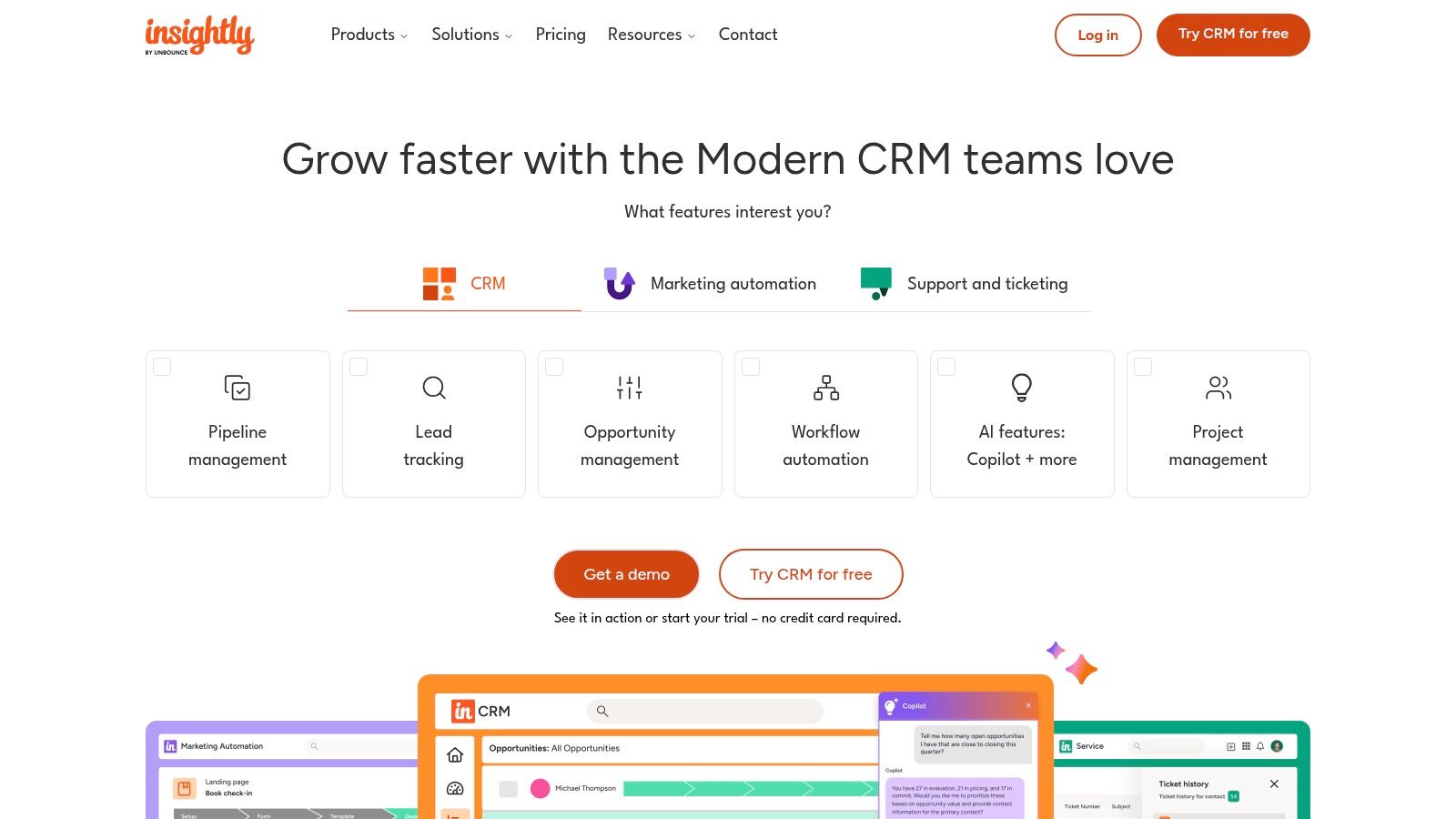
The platform’s strength lies in its ability to convert a closed deal into a project with just a few clicks, transferring all relevant data and creating a seamless handover from sales to operations. For businesses in the UAE and Saudi Arabia, particularly in service-based industries like creative agencies, consulting, or construction, this is a significant workflow advantage. It ensures nothing is lost in translation between securing a client and delivering the work. Insightly's AppConnect feature also provides robust no-code and API integration options, allowing it to connect with other essential business tools.
While Insightly is a strong contender for the best CRM for small business due to its combined sales and project features, it’s worth noting that advanced automation and comprehensive social media tools often require upgrading to higher-priced tiers. The bundled options for CRM, Marketing, and Service provide flexibility, but businesses should carefully evaluate which features are included in each plan to avoid unexpected costs as they grow.
- Best For: Service-based businesses that need a CRM with built-in project management to manage post-sale delivery.
- Pros: Combines CRM and project management effectively, logical feature mix for SMEs, flexible bundle options for marketing and service.
- Cons: Advanced automation and social features are often locked in higher tiers, which can increase the total cost of ownership.
- Website: https://www.insightly.com
12. Capsule CRM
Capsule CRM offers a refreshingly simple and clean approach to customer relationship management, designed for small businesses that prioritise clarity over complexity. It deliberately avoids the feature bloat common in larger platforms, focusing instead on core sales pipeline management, contact organisation, and task tracking. This makes it an excellent choice for solo entrepreneurs, freelancers, and small teams who need a functional CRM they can set up in minutes, not weeks, without requiring extensive training or technical support.
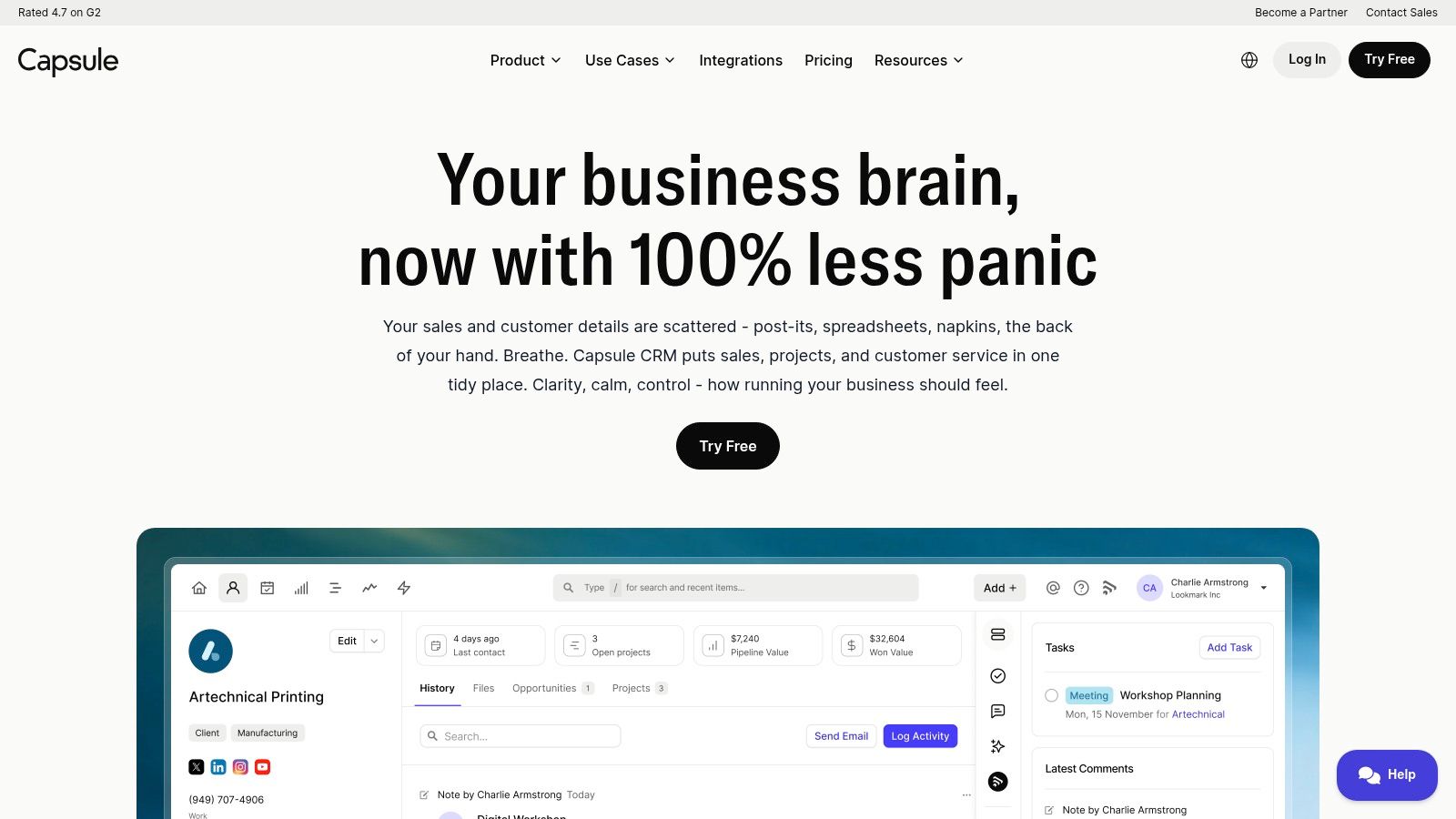
The platform’s strength is its simplicity. It provides a clear visual sales pipeline, customisable fields, and robust contact management that integrates tightly with Google Workspace and Microsoft 365. For businesses in the UAE and Saudi Arabia that need a straightforward system to track deals and client interactions without getting lost in complex automation, Capsule is one of the best CRM for small business options available. Its optional project management and marketing add-ons allow for gradual expansion as needs evolve, keeping the core experience uncluttered.
However, its minimalist design means it lacks the deep, native omnichannel capabilities required by many MENA businesses, such as advanced WhatsApp integration or complex Arabic automation workflows. The reporting and analytics are functional but not as comprehensive as those found in enterprise-grade systems. While it offers a fantastic, low-cost entry point for managing sales, businesses needing sophisticated marketing automation or customer service tools may find it limiting as they scale their operations in the region.
- Best For: Freelancers and very small teams needing a simple, affordable, and fast-to-implement sales pipeline tool.
- Pros: Extremely clean and intuitive user interface, minimal setup overhead, very affordable paid tiers suitable for early-stage SMBs.
- Cons: Lacks advanced analytics and omnichannel features, limited automation capabilities compared with larger CRM suites, not optimised for Arabic-speaking markets.
- Website: https://capsulecrm.com
Top 12 Small-Business CRMs — Quick Comparison
Beyond the Tool: How to Implement for Real Growth in the MENA Market
Navigating the landscape of CRM platforms can feel overwhelming. We've analysed a dozen of the top contenders, from HubSpot's comprehensive free tier and Zoho's all-in-one suite to specialised tools like Pipedrive and Freshsales. Each offers a unique combination of features, pricing, and complexity. However, selecting the best CRM for your small business is not the final step; it's merely the first. The true determinant of success isn't the software's logo, but how deeply it is integrated into the unique commercial rhythms of the MENA market.
A powerful CRM that doesn't understand the nuances of Arabic dialects, the dominance of WhatsApp, or the specific follow-up cadences required in local industries like healthcare and real estate is little more than a glorified, expensive address book. The real growth engine is activated when technology is moulded to fit your business processes, not the other way around. This requires a strategy that goes beyond feature lists and focuses on workflow orchestration.
From Software Selection to Systemised Growth
The core challenge isn't just about storing customer data. It's about turning that data into predictable revenue. This involves answering critical, region-specific questions:
- Omnichannel Reality: How will your CRM handle a lead that starts on Instagram, moves to WhatsApp for a query, and then receives an SMS appointment reminder? A disconnected system creates friction and lost opportunities.
- Localisation is Key: Does your chosen platform support right-to-left text entry flawlessly in all modules? Does it offer pre-built automation templates in Arabic that reflect local communication styles? Generic templates designed for Western markets often fall flat.
- Implementation Debt: Who will build the critical automation workflows? Setting up a CRM is one thing, but designing a lead nurturing sequence that automatically follows up with clinic inquiries via WhatsApp and email, in both Arabic and English, requires specialised expertise.
For businesses aiming for real growth, a strong understanding of Customer Relationship Management basics is crucial to effective implementation. But theory must be paired with practical, on-the-ground execution. Many small businesses invest in a great tool only to find it sits unused because the initial setup was either too complex or not aligned with their actual sales process. The gap between purchasing software and achieving a return on investment is where most initiatives fail.
The SMOrchestra Approach: Orchestration Over Installation
This is precisely the gap we fill at SMOrchestra. We don't just recommend a tool; we build and manage your entire growth engine. Our flagship solution for SMEs, SalesMfast AI, is a perfect example. It's built on a powerful underlying framework but has been completely re-engineered and localised for the MENA region. It comes pre-loaded with industry-specific "snapshots" containing proven workflows for clinics, B2B service firms, and e-commerce brands.
Instead of giving you a blank canvas, we provide a fully operational system from day one. This includes:
- Pre-built Arabic & English Workflows: Automated lead nurturing, appointment confirmations, and sales pipelines designed for how business is actually done here.
- Integrated Omnichannel Communication: Manage conversations from WhatsApp Business API, SMS, Instagram DMs, and email all in one unified inbox.
- AI-Assisted Efficiency: We leverage AI to help your team manage leads more effectively, ensuring faster response times and higher conversion rates.
Choosing the best CRM for a small business is less about the brand name and more about finding a partner who can translate its features into tangible results in your market. The ultimate goal is not just to have a CRM; it is to have a systemised, predictable, and scalable revenue machine.
Ready to move beyond just choosing a tool and start building a true growth engine? SMOrchestra specialises in deploying AI-driven, MENA-localised sales and marketing systems that deliver predictable results. Let's discuss how we can orchestrate your success. Visit SMOrchestra to learn more.
Article created using Outrank

Read Our latest
Lorem ipsum dolor sit amet, consectetur adipiscing elit.