For sales and marketing leaders in the MENA region, the standard 'just checking in' email is a wasted opportunity. In a market driven by relationships and efficiency, your follow-up process must be both personal and systemised. Generic templates fail because they ignore the unique communication preferences and business culture of the Gulf, where a timely WhatsApp message often carries more weight than a formal email. This guide moves beyond theory to provide actionable, CRM-driven strategies for designing and automating follow-up reminder emails that convert leads.
We will cover specific workflows, bilingual templates (Arabic and English), and multi-channel tactics designed for businesses leveraging automation to scale sales and marketing. You will learn how to structure multi-touch sequences, integrate value-add content, and use behavioural triggers to send the right message at the right time. Forget generic advice; this is a step-by-step playbook for building a robust follow-up system that respects regional nuances and delivers measurable results. We will break down everything from subject lines and timing cadence to segmenting your audience and using tools like SMOrchestra to orchestrate conversations across email, SMS, and WhatsApp. This is your guide to creating a conversion-focused follow-up machine.
1. The Multi-Touch Follow-Up Sequence Strategy
A single email is rarely enough to convert a lead, especially in the MENA region's B2B landscape where decision-making involves multiple stakeholders and longer sales cycles. The Multi-Touch Follow-Up Sequence is a systematic approach that uses a series of 3-7 automated emails sent at strategic intervals to nurture leads, maintain momentum, and drive conversions. This method recognises that consistent, valuable touchpoints are essential for building trust and staying top-of-mind.
Each email in the sequence serves a distinct purpose, guiding the lead through the buyer's journey without being repetitive. For instance, the first follow-up might reference the initial contact, the second could offer a valuable resource like a case study, and a later email might propose a brief call to discuss specific pain points. The key is automating this workflow within your CRM to ensure consistency and efficiency.
How to Implement a Multi-Touch Sequence
To create effective follow-up reminder emails that convert leads, focus on structure and relevance. A typical cadence might be sending emails on Day 1, Day 3, Day 7, and Day 14 after the initial contact.
- Segment by Lead Source: Customise your sequence based on how you acquired the lead. A follow-up for a website demo request should be different from one for an event attendee.
- Vary Your Call-to-Action (CTA): Instead of repeatedly asking for a demo, vary the ask. Suggest downloading a whitepaper, watching a video testimonial, or connecting on LinkedIn.
- Personalise and Localise: Use dynamic content blocks in your CRM to deliver messages in the lead’s preferred language, whether Arabic or English. Also, schedule sends during optimal MENA business hours, typically between 9 AM and 12 PM local time.
- Automate Smartly: Configure your CRM, like SMOrchestra, to automatically remove a contact from the sequence once they reply or book a meeting. This prevents awkward or irrelevant follow-ups. For a deeper dive into crafting these automated workflows, you can learn more about building CRM email sequences for outbound sales.
Examples for CRM Automation
Example 1: Follow-up after No Response (B2B SaaS)
- Trigger: Lead is tagged
Demo_Requestand 3 days have passed with no reply. - Subject: Following up on your demo request for [Your Product]
- Body:
Hi [First Name],
Following up on my previous email. I wanted to share a one-page case study on how [Similar Regional Company] used our platform to achieve [Specific Result, e.g., 25% increase in lead conversion].
Are you free for a 15-minute call this week to discuss how we can do the same for [Lead's Company Name]?
Best,
[Your Name]
Example 2: Re-engagement for a Cold Lead
- Trigger: Lead status is
Coldand has not been contacted in 90 days. - Subject: A new resource for [Lead's Industry] leaders
- Body:
Hi [First Name],
I know it's been a while since we last spoke. My team just published a new guide on [Relevant Topic, e.g., "AI-driven Customer Engagement Trends in the GCC for 2024"] that I thought you might find valuable.
You can access it here: [Link to Resource]
Would it be worth reconnecting for a brief chat next week?
Regards,
[Your Name]
For an in-depth exploration of timing and more templates, consult this ultimate guide to follow-up emails after no response.
2. The Value-Add Content Follow-Up Strategy
Instead of repeatedly asking for a meeting, this strategy focuses on positioning your brand as a helpful advisor. Each follow-up provides genuinely useful content, such as case studies, market reports, or webinar invitations. This approach is particularly effective in the MENA business culture, where building trust and demonstrating value are crucial prerequisites for any sales conversation. It shifts the dynamic from a persistent sales pitch to a supportive partnership.
By sharing relevant resources, you address the lead’s pain points and keep your brand top-of-mind without being intrusive. This proves you understand their industry and challenges. It transforms follow-up reminder emails that convert leads from simple nudges into valuable touchpoints that build credibility and nurture the relationship over time.
How to Implement a Value-Add Content Strategy
To execute this effectively, your content must align directly with your prospect’s specific business challenges. The goal is to educate and empower, not just to sell.
- Map Content to Pain Points: Identify the top three challenges for your target MENA audience. Create dedicated content, such as a whitepaper on supply chain optimisation for GCC retailers or an ROI calculator for SaaS implementation, to address each one.
- Localise for Maximum Impact: Use bilingual case studies featuring well-known regional companies to increase relevance. Creating Arabic versions of your top-performing English content assets, like infographics or short videos, can significantly boost engagement.
- Personalise Based on Discovery: Reference specific challenges mentioned in an initial call. For example, if a prospect mentioned issues with customer support, send them a case study on how another local company improved their CX metrics.
- Track Engagement: Use your CRM to monitor which content assets generate the highest click-through and open rates. This data helps you refine your strategy and prioritise the most effective resources for future follow-ups.
3. The Personalisation and Segmentation at Scale Follow-Up Strategy
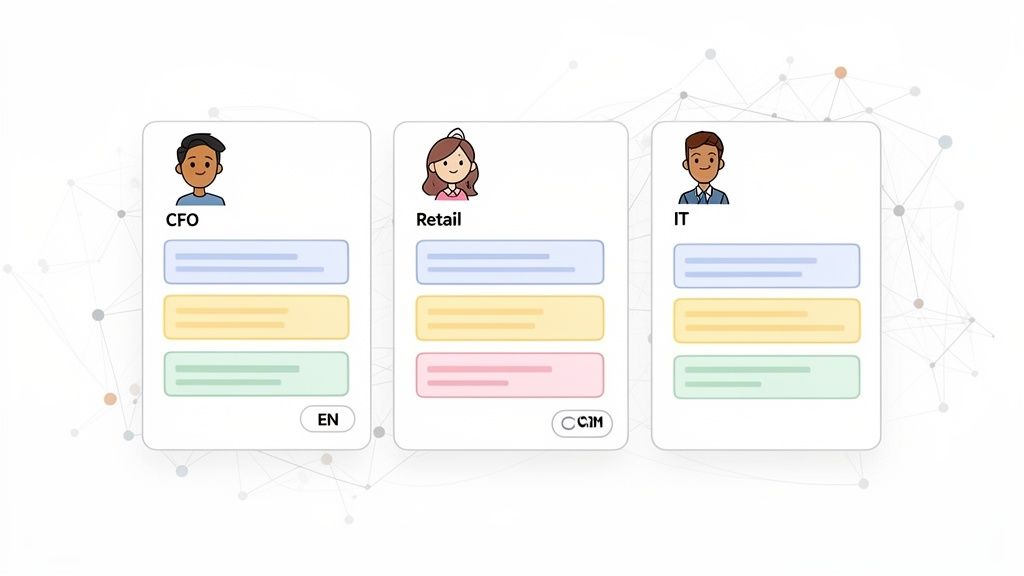
Generic, one-size-fits-all emails are ineffective in the MENA region, where business relationships and nuanced understanding are paramount. A strategy built on personalisation and segmentation at scale combines deep CRM data with firmographic and behavioural insights to deliver highly relevant follow-ups. This approach treats each lead as an individual by referencing their specific context, industry, and challenges, making your outreach feel like a one-to-one conversation rather than a mass broadcast.
This method merges dynamic, account-aware messaging with progressive profiling, where you gather more data over time to continually refine your segments. For example, a follow-up to a lead in the GCC retail sector could reference recent market trends like the growth of e-commerce, while a message to a tech start-up in Egypt might focus on scaling operations. This is about using automation to create tailored experiences, not just to send bulk emails.
How to Implement Personalisation and Segmentation
To create follow-up reminder emails that convert leads using this strategy, focus on data-driven customisation and smart segmentation. The goal is to make every email feel personally crafted, even when automated.
- Leverage Dynamic CRM Data: Pull in specific details like the prospect's company name, job title, and industry. Mention a recent company achievement or news article you found on LinkedIn to show you’ve done your research.
- Segment by Regional and Industry Pain Points: Create segments for key industries in the MENA region, such as real estate, fintech, or healthcare. Tailor your follow-up copy to address specific challenges, like “navigating digital transformation in GCC retail” or “improving patient communication for clinics in the UAE”.
- Use Progressive Profiling: Don’t ask for all information at once. Use each follow-up to gather one new piece of data. For instance, ask, “What is your team’s biggest priority this quarter?” or “How many users are you planning for?” This enriches your lead profiles over time.
- Localise Language and Content: Automatically send emails in the lead’s preferred language, whether Arabic or English, based on data in your CRM. For high-value prospects, consider including a personalised video message to build a stronger connection.
For small businesses aiming to implement these advanced tactics, selecting the right platform is crucial. You can explore a comparison of the best CRM for small business to see how different systems support scalable personalisation.
4. The Social Proof and Authority Follow-Up Strategy
When a lead is hesitant, showing them that trusted peers have already found success with your solution is a powerful motivator. The Social Proof and Authority Follow-Up Strategy leverages testimonials, case studies, customer logos, and industry awards to build credibility and dismantle objections. This approach is particularly effective in the MENA region, where business decisions are heavily influenced by reputation and peer validation.
Instead of simply restating your value proposition, you let the success of your existing clients do the talking. Highlighting a well-known regional brand that uses your service or showcasing a case study with impressive, quantifiable results can significantly reduce a lead's perceived risk. This transforms a simple reminder into a compelling trust-building exercise.
How to Implement a Social Proof Strategy
To create effective follow-up reminder emails that convert leads, you must present relevant proof that resonates with your prospect’s specific context. The goal is to make the lead think, "If it worked for a company like mine, it will work for me."
- Segment by Industry and Region: Do not send a retail case study to a healthcare clinic. Use your CRM to segment leads and send them social proof from their specific industry. Prioritise featuring well-known MENA-based customers to maximise relevance and build local trust.
- Use Specific Metrics: Vague claims like "improved sales" are weak. Use concrete data: "Our client, a Dubai-based e-commerce brand, increased their conversion rate by 45% in three months."
- Localise Your Proof: Include Arabic-language testimonials and video case studies from Arabic-speaking customers. This shows a deep understanding of the local market and builds a stronger connection with bilingual decision-makers.
- Rotate Social Proof Elements: In a multi-touch sequence, vary the type of proof you share. An initial follow-up might include customer logos, a second could link to a detailed case study, and a third could feature a powerful quote from a client.
5. The Channel Diversification Follow-Up Strategy
Relying solely on email for follow-ups is no longer enough to cut through the noise, particularly in the MENA region where communication preferences are rapidly evolving. The Channel Diversification Strategy involves integrating multiple touchpoints like WhatsApp, SMS, LinkedIn, and phone calls into a cohesive follow-up sequence. This approach meets prospects on their preferred platforms, increasing the likelihood of a response by engaging them where they are most active and receptive.
This strategy is highly effective because it acknowledges that different channels serve different purposes. In the GCC, WhatsApp boasts an engagement rate far exceeding that of traditional email, making it indispensable for timely follow-ups. By coordinating these channels through a central CRM or automation platform, you create a persistent yet non-intrusive presence, ensuring your message is seen and acted upon.
How to Implement a Channel Diversification Strategy
To build powerful follow-up reminder emails that convert leads and supplement them with other channels, focus on coordination and context. A prospect who ignores two emails might be highly responsive to a brief, professional WhatsApp message.
- Prioritise MENA-Specific Channels: With WhatsApp penetration exceeding 85% in many GCC countries, it should be a primary follow-up tool. If an email receives no response after 48 hours, an automated WhatsApp nudge referencing the email can be highly effective.
- Assign Roles to Each Channel: Use each platform for its strengths. Email is ideal for formal proposals and detailed information, WhatsApp for quick reminders or informal check-ins, SMS for time-sensitive appointment confirmations, and LinkedIn for engaging with senior B2B decision-makers.
- Create Channel-Specific Messaging: Your communication style should adapt. A WhatsApp message can be more conversational and use Arabic or English, while an email should maintain a more formal, professional tone.
- Automate and Track Responses: Use a unified platform like SMOrchestra to automate the sequence. For example, a system can be configured to send a WhatsApp message automatically if an email isn't opened, and stop all follow-ups once the lead replies on any channel. This prevents disjointed communication and ensures a seamless customer experience.
For a deeper understanding of how to integrate these different touchpoints effectively, explore our guide on why your ads, emails, and website aren't working together and how to fix it.
6. The Objection-Handling Follow-Up Strategy
Instead of sending generic reminders, the Objection-Handling Follow-Up Strategy turns potential deal-breakers into opportunities. This proactive approach involves designing emails that directly address specific concerns or objections a lead has raised or is likely to have, such as budget, implementation time, or the need for specific integrations. By tackling these issues head-on, you demonstrate expertise and build trust, showing the lead you have already considered their unique challenges.
This method moves the conversation forward by providing solutions, not just reminders. For instance, if a prospect in the MENA healthcare sector expresses concern over regulatory compliance, a targeted follow-up could share a case study on how your solution meets local data sovereignty laws. Similarly, a fintech lead worried about security can receive an email detailing your compliance certifications. These are powerful follow-up reminder emails that convert leads because they resolve friction points.
How to Implement an Objection-Handling Strategy
After a discovery call or initial meeting, segment leads based on their primary concerns to deliver highly relevant content.
- Segment by Objection: Tag contacts in your CRM (like SMOrchestra) based on the objections they raise, such as 'budget-sensitive', 'integration-heavy', or 'timeline-critical'.
- Create Objection-Specific Resources: Develop a library of content to counter the top 3-5 objections in your market. This could include ROI calculators for budget concerns, detailed timelines for implementation worries, or technical documentation for integration questions.
- Use the Prospect's Own Words: Frame your follow-up by referencing their specific comment. For example, "You mentioned a concern about implementation time..." This shows you were listening and makes the email highly personal.
- Localise for MENA-Specific Concerns: For B2B sales in the Gulf, be prepared to address objections around data residency, local support availability, and Arabic language integration. A follow-up email confirming your local data centres or Arabic-speaking support team can be a significant differentiator.
7. The Behavioral Trigger and AI-Driven Follow-Up Strategy
Moving beyond static, time-based sequences, the behavioral trigger and AI-driven strategy uses real-time prospect actions to launch highly relevant follow-ups. This intelligent approach monitors how leads interact with your digital assets, such as website visits, email opens, content downloads, or form submissions. An AI-powered system then triggers an immediate, contextually aware email, capitalising on the moment of peak interest. This ensures your follow-up is not just timely but also directly related to the lead’s last action.
This method transforms your outreach from a monologue into a responsive dialogue. For instance, if a prospect in Dubai downloads a pricing guide, the system can automatically send an email offering a tailored quote or a call with a sales rep. This level of personalisation is crucial for creating follow-up reminder emails that convert leads in the competitive MENA market.
How to Implement a Behavioral and AI-Driven Strategy
To effectively deploy this strategy, you must clearly define the triggers that matter most to your sales cycle and trust AI to handle the micro-optimisations. The goal is to let prospect behaviour guide your automation.
- Define Clear Behavioural Triggers: Map specific actions to automated responses. For example, a prospect viewing your services page three times in a week could trigger a case study email, while one who abandons a cart could receive a reminder with a small incentive.
- Leverage AI for Send-Time Optimisation: Instead of guessing the best time to email, let an AI engine analyse each contact’s past engagement patterns. This ensures your message lands in their inbox at the precise moment they are most likely to open it, whether that’s 9 AM in Riyadh or 11 AM in Cairo.
- Segment AI Models for MENA: To ensure accuracy, train separate AI models for your Arabic-speaking and English-speaking audience segments. This accounts for linguistic nuances and cultural differences in communication styles, improving message relevance and engagement.
- Balance Automation with Human Oversight: Use AI to identify high-intent signals and trigger automated workflows, but empower your sales team to review and personalise the message before it sends. This creates a powerful combination of efficiency and a genuine human touch.
For businesses in sectors like real estate where client actions signal strong intent, this strategy is particularly effective. You can find out more about applying these principles in our guide on customer relationship management for real estate.
8. The Human-Inserted Conversation Break Strategy
While automation is powerful, the human touch remains irreplaceable, particularly in the MENA region where business is built on personal relationships. The Human-Inserted Conversation Break strategy blends automation's efficiency with the high-impact personalisation of human interaction. This approach involves programming your automated sequence to pause at a critical moment and trigger a task for a sales representative to intervene manually.
This hybrid model ensures that high-value or highly engaged leads receive tailored outreach that an automated email cannot replicate. For instance, after a prospect opens three consecutive emails but doesn't reply, the system can automatically assign a task for a sales rep to send a personal video message or make a call. This timely, human intervention can be the tipping point that converts a warm lead into a qualified opportunity, as it demonstrates genuine interest and adapts to the lead's specific behaviour.
How to Implement a Human-Inserted Conversation Break
To effectively design follow-up reminder emails that convert leads, you must strategically define the triggers for human intervention. This ensures your sales team's time is focused on the most promising prospects.
- Define Clear Triggers: Set up rules in your CRM to alert a representative. Triggers could include a lead visiting your pricing page, downloading a key resource like a case study, or a high lead score threshold being met. The trigger should signify strong intent.
- Equip Your Team for MENA Outreach: Train your sales team on regional business etiquette. For phone outreach, be mindful of prayer times and avoid calls on Fridays in the Gulf region. Ensure they can communicate effectively in both Arabic and English, depending on the lead's profile.
- Vary the Human Touchpoint: The intervention doesn't always have to be a phone call. Instruct your team to send a personalised 30-60 second video via email, connect on LinkedIn with a relevant message, or use an AI-powered voice note in the lead's preferred language.
- Log and Measure: Mandate that all manual interactions are immediately logged in the CRM, like SMOrchestra. This prevents awkward duplicate messaging from the automated system. Analyse the data by comparing the conversion rates of sequences with human touchpoints versus those that are purely automated to refine your strategy.
Example for CRM Automation
Meeting Reminder Workflow (Email + WhatsApp)
- Trigger: 24 hours before a scheduled meeting.
- Subject: Reminder: Our call tomorrow at [Meeting Time]
- Body:
Hi [First Name],
Looking forward to our call tomorrow at [Meeting Time] to discuss [Meeting Topic].
You can join using this link: [Meeting Link]
Please let me know if you need to reschedule.
Best,
[Your Name]
- Message: "Hi [First Name], a quick reminder about our call in one hour. Looking forward to speaking with you. [Your Name]"
8-Strategy Follow-Up Reminder Email Comparison
Automating Your Next Conversation
Mastering the art and science of follow-up reminder emails that convert leads is no longer about sending a single, hopeful message into the void. As we have explored, it is about designing a sophisticated, multi-layered system that anticipates your lead’s needs, respects their time, and consistently proves your value. The journey from initial contact to conversion is a conversation, and in the bustling MENA market, that conversation must be persistent, personal, and multi-channel.
Key Takeaways for Immediate Action
Let's distill the core strategies into actionable principles. The most successful follow-up systems are not built on a single tactic but on the intelligent integration of several. You must move beyond the basic "just checking in" email and embrace a more dynamic approach.
- Systemise, Don't Improvise: Ditch the ad-hoc follow-ups. Start by mapping out a multi-touch sequence as your foundation. This provides a reliable structure that ensures no lead is forgotten.
- Deliver Value, Not Just Reminders: Transform your follow-ups from interruptions into welcome resources. Infuse your sequences with value-add content, social proof, and insights that directly address your lead's potential pain points.
- Automate the Process, Not the Personality: Use your CRM and automation tools to handle the heavy lifting of timing and delivery. This frees you up to personalise messages at critical junctures, segment your audience based on behaviour, and intervene with a human touch when the system flags an opportunity.
- Go Beyond the Inbox: Recognise that your leads in the UAE, Saudi Arabia, and across the region operate on multiple platforms. Integrating timely WhatsApp or SMS nudges into your email cadence is not optional; it’s essential for cutting through the noise.
Your Path to a High-Converting Follow-Up Engine
The true power of these strategies is unlocked when they work in concert. A behavioural trigger might prompt a value-add email, which, if unopened, is followed by a concise WhatsApp message. An objection handled in one email can be reinforced with a case study in the next. This orchestrated approach transforms follow-up from a chore into a predictable, revenue-generating machine.
By implementing these frameworks, you are not just sending better emails; you are building stronger relationships. You are demonstrating a deep understanding of your customer's journey and proving that your organisation is the right partner to help them succeed. To further refine your outreach and ensure every message lands with maximum impact, it is crucial to align your follow-up strategy with holistic best practices for email campaigns. This ensures consistency and professionalism across all your automated communications.
Ultimately, effective follow-up reminder emails that convert leads are a testament to your commitment. They show that you are organised, persistent, and genuinely invested in solving your prospect’s problems. It’s time to stop leaving conversations unfinished and start automating your next conversion.
Ready to build an automated follow-up system that integrates email, WhatsApp, SMS, and AI voice? SMOrchestra provides the powerful, MENA-focused platform you need to orchestrate every customer conversation in both English and Arabic. Explore SMOrchestra to see how you can turn these strategies into your new sales and marketing engine.

Read Our latest
Lorem ipsum dolor sit amet, consectetur adipiscing elit.