Diving into pay-per-click advertising in Dubai without a map is like trying to navigate the desert with a faulty compass. You can't just apply a generic global template and expect results. The market's high costs and incredibly diverse audience will burn through your budget faster than you can say "Burj Khalifa." To get it right, you have to think local from day one.
Decoding the Dubai PPC Landscape
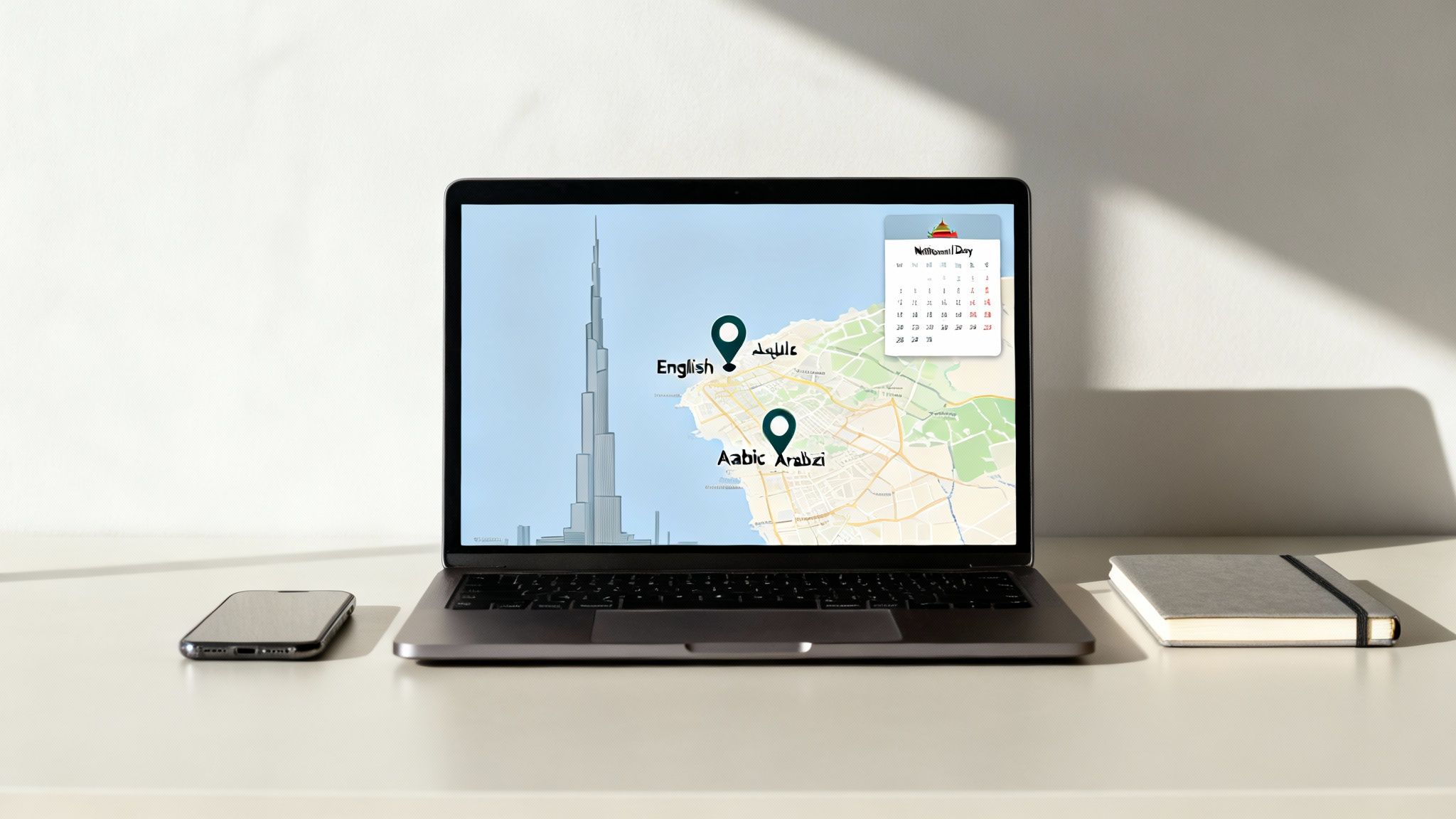
Running a PPC campaign here isn't like doing it in Europe or North America. Sure, Dubai is a global hub, but its digital advertising scene has a very distinct local flavour. Ignoring this is the quickest way to end up with a negative return on your ad spend.
The first thing that hits you is the cost. The UAE has the highest average Cost Per Click (CPC) on the planet, clocking in at 8% more than in the United States. That premium means every single click has to count. There’s absolutely no room for sloppy targeting or wasteful spending.
The Multicultural Consumer Mix
Dubai’s population is a true melting pot, with over 200 nationalities calling it home. This isn't just a fun fact; it's a massive targeting challenge that goes way beyond basic demographics. You’re not talking to one audience; you’re speaking to dozens of distinct cultural and linguistic groups all at once.
Here’s what that means in practice:
- Language is More Than Just a Toggle: You can't simply choose between English and Arabic. Many younger residents chat in 'Arabizi'—a hybrid of Arabic written with English letters. A smart language strategy needs layers, often demanding separate ad groups for formal Arabic, English, and even colloquial Arabizi to truly connect.
- Cultural Context is Everything: An image or message that works perfectly for one group might be confusing or even offensive to another. Your ad creative has to be culturally aware and relevant to the specific segment you're trying to reach.
- Purchasing Power is Wildly Diverse: The market is a mix of ultra-high-net-worth individuals, mid-income professionals, and a huge population of blue-collar workers. Each segment has completely different online habits, needs, and reactions to ads.
Timing and Seasonality Are Not Optional
The commercial pulse of Dubai beats to the rhythm of cultural and religious events. Your standard annual marketing calendar is basically useless here.
A successful PPC strategy in Dubai isn’t just about bidding on the right keywords; it’s about bidding at the right time. Aligning your campaigns with key seasons like Ramadan, Eid, and the Dubai Shopping Festival can dramatically amplify your results.
During these periods, consumer behaviour and online activity shift massively. In Ramadan, for instance, online engagement often spikes late at night. If you don't adjust your ad schedule, you'll miss your audience when they're most receptive. It's a rookie mistake, but one that many businesses—and even some agencies—make.
Getting this foundational knowledge right is critical before you even touch a keyword or write a line of ad copy. For a closer look at these local dynamics, our guide on choosing a digital marketing agency in Dubai offers deeper insights into what it takes to win in this region.
Picking the Right PPC Platforms for the Dubai Market
Deciding where to put your ad money is the first big hurdle in any PPC campaign here in Dubai. It’s tempting to be everywhere at once, but that’s a surefire way to burn through your budget with little to show for it. The smart money is on a focused, multi-platform strategy that’s built around your actual business goals.
Let's be clear: not all platforms are created equal, especially when you're trying to reach the diverse mix of people in the UAE. Each one has its own crowd, its own purpose, and its own strengths.
Google Ads for Capturing High-Intent Searches
Think of Google Ads as the king of intent. When someone in Dubai types "luxury apartments for sale" or "best pediatric dentist near me," they aren't just browsing—they have a problem and are actively looking for a solution. This makes Google the most potent platform for catching leads at the very bottom of the funnel, right when they're ready to pull the trigger.
It’s the digital equivalent of having your shop in the perfect location at the perfect time. If you’re running a service-based business, a clinic, a B2B company, or you're in real estate, being on Google Search isn’t just an option; it's essential. The catch? High intent means high competition and higher costs. You need laser-focused keyword targeting and a fantastic landing page, or you'll see your budget disappear fast.
Meta for Building Broad Audience Engagement
If Google is about capturing existing demand, Meta—that's Facebook and Instagram—is all about creating it. Its powerful targeting lets you get in front of incredibly specific segments of the UAE’s multicultural population based on their demographics, interests, and online behaviour, often before they even know they need you.
This makes it a goldmine for e-commerce, restaurants, events, and any brand looking to build awareness. A local fashion label, for example, can zero in on young, affluent women in Dubai who follow specific luxury influencers and have a history of online shopping.
But running ads on Meta here has its own financial quirks. An analysis of over $3 billion in ad spend showed the average Cost-Per-Click (CPC) for Facebook Ads in the UAE is $1.18, which is 3% higher than the global average. These costs can also swing wildly, from as low as $0.65 to a peak of $1.89 during major shopping seasons like Ramadan or Black Friday. You can dig deeper into these UAE advertising cost trends to get a better handle on your budgeting.
LinkedIn for High-Stakes B2B and Professional Networking
When your customers are other businesses, LinkedIn is your primary hunting ground. Nothing else comes close to its ability to target professionals by their exact job title, industry, company size, or even their seniority.
A B2B software company trying to reach CTOs in Dubai's booming finance sector can create a campaign that speaks directly to that small but incredibly valuable audience. It’s also the platform of choice for luxury real estate developers and high-end car brands aiming to connect with high-net-worth individuals.
It’s true, the cost per click on LinkedIn is much higher than on other platforms. But the potential value of a single, qualified lead from the right decision-maker often makes the investment more than worthwhile. It's a classic case of quality over quantity.
TikTok for Tapping into Younger Demographics
TikTok has exploded from a fun app for teens into a serious commerce powerhouse. The algorithm is scarily good at figuring out what users like and feeding them more of it, which creates a fantastic environment for product discovery.
For any direct-to-consumer brand in fashion, beauty, food delivery, or mobile apps, TikTok is an unmissable chance to connect with Gen Z and millennial audiences. But you have to play by its rules. Success here demands a totally different creative style—think less polish, more personality and authenticity.
To make things a bit clearer, I've put together a table that breaks down which platform might be the best fit for your business here in Dubai.
PPC Platform Comparison for the Dubai Market
This quick comparison should help you match your business goals with the platform that will give you the best shot at success.
Ultimately, the smartest approach usually involves a strategic blend. A luxury property developer, for example, might use LinkedIn to target C-suite executives, Instagram to build a visually stunning brand, and Google Ads to catch people actively searching for real estate investments. Matching the platform to your audience and goals is the first, most crucial step to building a PPC machine that actually makes you money in Dubai.
Mastering Your Budget and Bidding Strategy
Let’s talk money. Figuring out a budget for pay-per-click advertising in Dubai can feel a bit like shooting in the dark, but it doesn't have to be. Your budget is the engine for your entire campaign, and how you manage it is the difference between getting a fantastic return and just burning through cash.
First things first, you need to understand the real costs. This isn't just about the ad spend you pay directly to platforms like Google and Meta. If you’re partnering with a performance marketing agency, you have to account for their management fees too. Forgetting that second piece is a quick way to get an unpleasant surprise on your invoice.
Setting a Realistic Starting Budget
So, how much should you actually plan to spend? Looking at industry benchmarks, a smaller, focused PPC campaign in Dubai typically starts with management fees somewhere between AED 1,500 to AED 3,000 per month. That's before you even add the ad spend.
For more ambitious, medium-sized campaigns with several ad groups, you're likely looking at AED 4,000–AED 8,000 in management fees. And for those all-in strategies that pull in deep analytics and conversion rate optimisation (CRO), the fee can easily be AED 10,000 or more.
Here's a common mistake I see all the time: businesses underfund the initial test phase. It's far smarter to allocate a focused test budget—say, AED 3,000 to AED 5,000 in ad spend—for a month or two on your most valuable keywords. Spreading a tiny AED 1,000 budget thinly across ten different campaigns is a recipe for inconclusive data.
This infographic breaks down where you'll be putting that money to work.
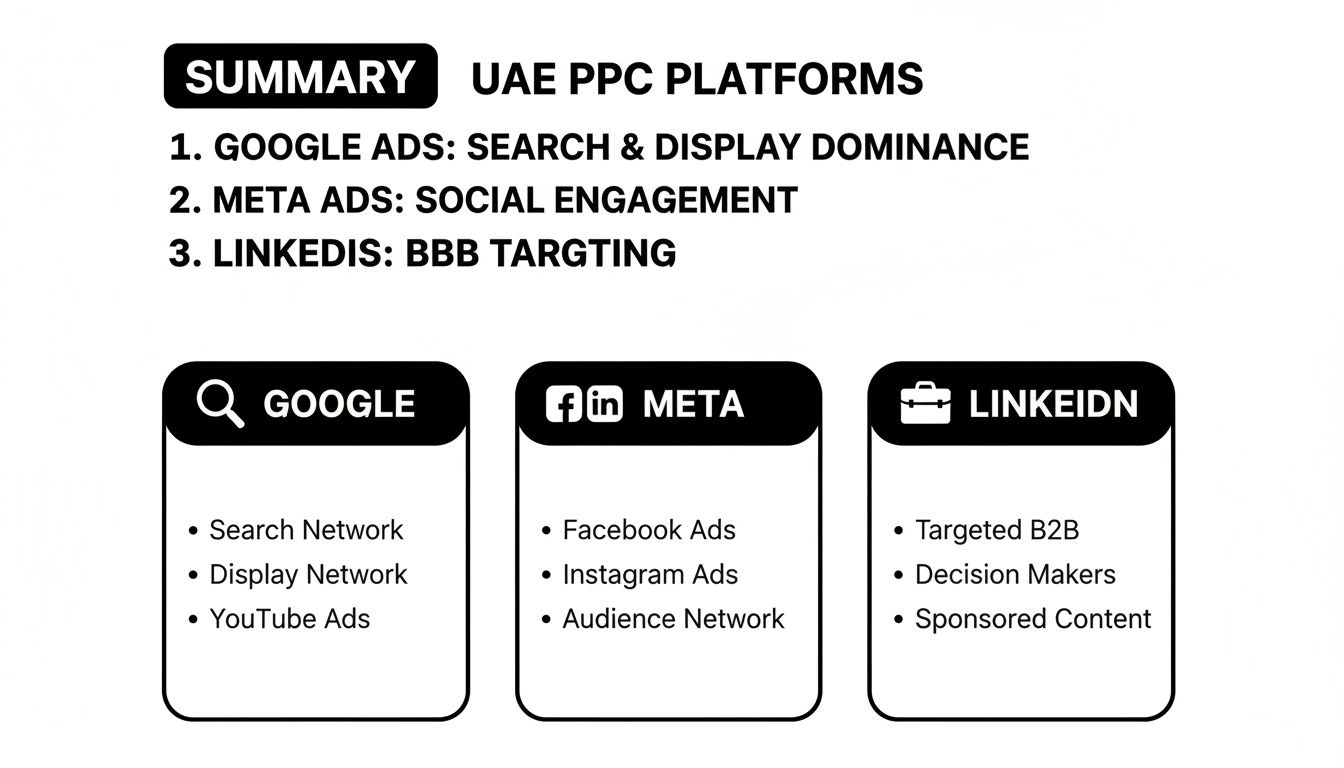
As you can see, each platform has its specialty. Google is your go-to for capturing high-intent searches, Meta is brilliant for building awareness with broad audiences, and LinkedIn is unparalleled for zeroing in on professionals.
Choosing the Right Bidding Strategy
Your bidding strategy is essentially the rulebook for how your budget gets spent. While the platforms offer a dizzying array of options, they really boil down to two main philosophies: you take the wheel (manual), or you let the machine drive (automated).
Manual CPC (Cost-Per-Click): This puts you in complete control. You tell the platform the absolute maximum you’re willing to pay for a single click. It's a fantastic way to start a new campaign because it helps you get a real feel for baseline costs and keeps a tight rein on spending. The downside? It’s incredibly time-consuming and just doesn't scale well.
Automated & Smart Bidding: This is where the magic of machine learning comes in. Instead of just bidding for clicks, platforms like Google can optimise your bids to achieve specific outcomes.
Some of the most popular automated strategies include:
- Maximise Conversions: The algorithm’s only job is to get you the highest number of conversions possible within your daily budget. This is a great fit when you have a clear action you want users to take, like filling out a form or making a purchase.
- Target CPA (Cost Per Acquisition): You define how much a new customer is worth to you, and the system automatically adjusts bids to try and hit that exact target cost.
- Target ROAS (Return On Ad Spend): This is an e-commerce favourite. You set a goal for your return—for example, "I want AED 5 in revenue for every AED 1 I spend"—and the algorithm bids to make that happen.
Here’s a bit of contrarian advice: jumping straight into smart bidding on a brand-new account is usually a mistake. These algorithms are data-hungry; they need at least 30-50 conversions per month to learn effectively.
A much better approach is to start with Manual CPC or Maximise Clicks to gather that crucial initial data. Once you have a steady stream of results coming in, then you can confidently switch to a conversion-focused smart bidding strategy.
Nailing your bidding strategy is a cornerstone of success, something we discuss when explaining what to look for in a performance marketing company. And for a deeper dive, master your ad spend with this strategic guide to Google Ads budget management.
Getting Your Ad Creative to Actually Convert
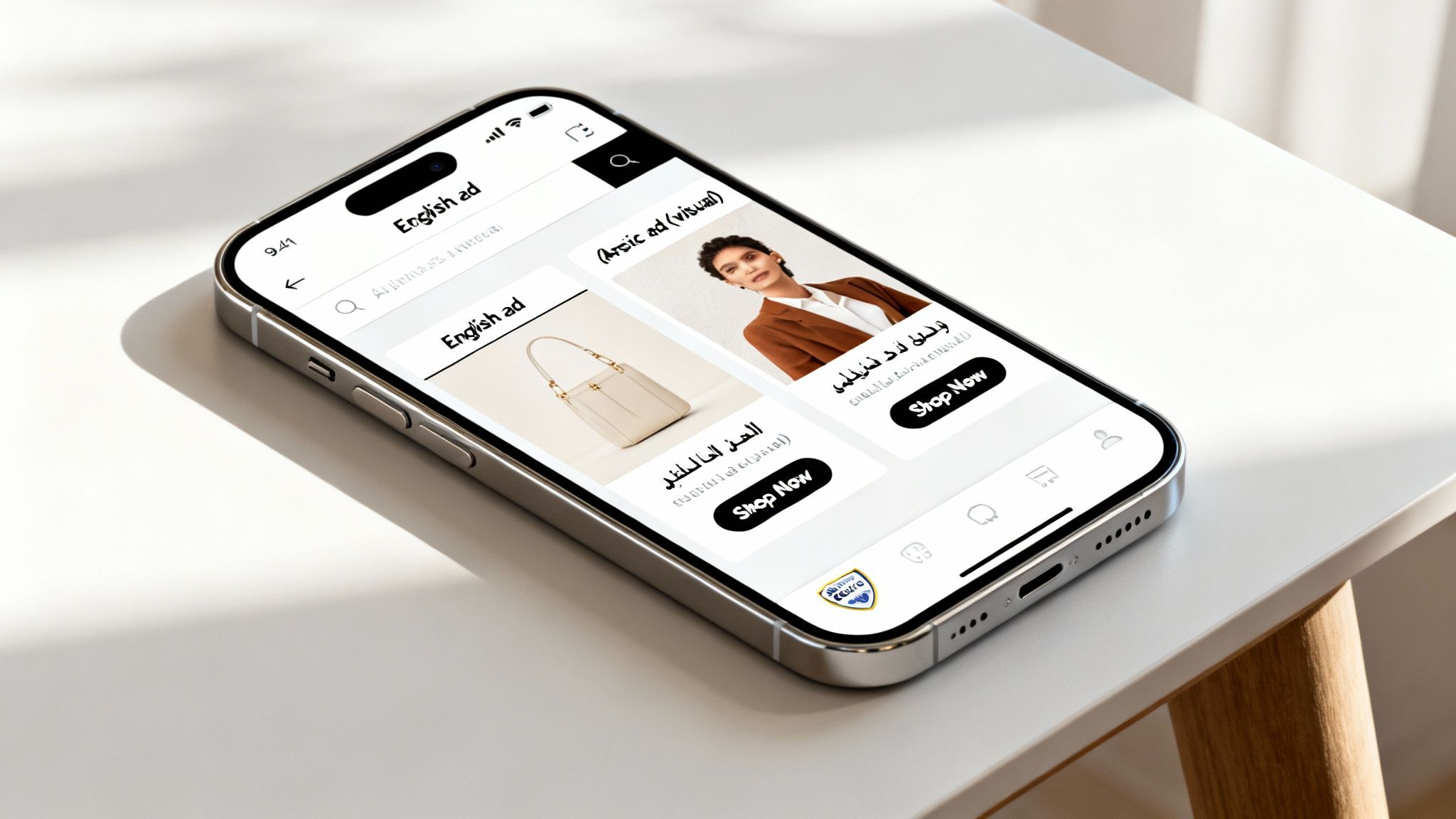
In a place as visually driven as Dubai, slick design is just the price of admission. What separates an ad that gets ignored from one that actually converts is something much deeper: cultural resonance. This is exactly where I see so many international brands stumble—they launch campaigns that look great but are culturally tone-deaf, and they fall completely flat.
Think of your ad creative, the mix of your visuals and your words, as your one shot to make a real impression. It has to be powerful enough to stop someone mid-scroll and speak directly to a specific person within Dubai’s incredible diversity. This means going way beyond just translating your copy.
Speaking Their Language—Literally and Culturally
The language you choose is a huge signal. It instantly tells people who your brand is for and, just as importantly, who it isn't for. Get it wrong, and you've lost them before they've even read your offer.
- English: This is your go-to for reaching the massive expatriate community and for any B2B campaigns. It’s the safe, reliable choice.
- Formal Arabic (Fus'ha): You’ll need this for anything related to government services or if you're a high-end luxury brand looking to build credibility with Emirati nationals.
- Colloquial Arabic: This is where the magic happens. Using local Gulf dialects makes your brand feel familiar and builds an instant connection that formal language just can't match.
- 'Arabizi': This mix of Arabic words written with English letters is all over social media, especially with the younger crowd. Used well, it can make you seem current and relatable. But be careful—get it wrong, and it can backfire badly.
Your visuals need the same local touch. A generic stock photo of a Western family just won't cut it here. Use imagery that reflects the local environment and features faces that represent the true diversity of the people who live here.
Designing a Landing Page That Closes the Deal in the UAE
Your ad is only half the job. You’ve earned the click, but your landing page has to seal the deal. If there’s a mismatch between what your ad promised and what the page delivers, you’ve just paid for a bounce. It’s a classic mistake in pay-per-click advertising in Dubai that costs businesses a fortune.
A landing page that works in this market is built on a few core, non-negotiable principles.
The single biggest mistake I see? A terrible mobile experience. Smartphone use in the UAE is through the roof. Your landing page must be designed for mobile-first, not just be ‘mobile-responsive.’ If it’s slow or clunky on a phone, you are literally throwing your ad budget away.
Here’s what a high-converting landing page needs:
- Crystal-Clear Message Match: If your ad screams "50% Off Desert Safaris," that offer better be the first thing people see on the page. No exceptions.
- A Single, Obvious Call-to-Action (CTA): What’s the one thing you want them to do? "Book Now," "Download Brochure," "Request a Callback"—whatever it is, make it big, bold, and impossible to miss. Using WhatsApp as a CTA is incredibly effective here.
- Trust Signals: Show them you're legit. Displaying logos of well-known local clients, industry certifications, or customer reviews builds credibility in seconds.
- Frictionless Forms: Keep your forms short. Ask only for what you absolutely need. Every extra field you add will kill your conversion rate.
- Local Payment Options: If you're selling something, you must offer options like Cash on Delivery (COD) and local payment gateways such as Tabby or Tamara. This isn't optional; it's essential.
Building a landing page that works in harmony with your ads is a science. To see these principles in action, check out our guide on e-commerce website design in Dubai, which dives deep into creating user experiences that actually drive sales. By perfectly aligning your creative and your landing page, you create a smooth journey that turns expensive clicks into real, valuable customers.
Optimising Your Campaigns for Long-Term Growth
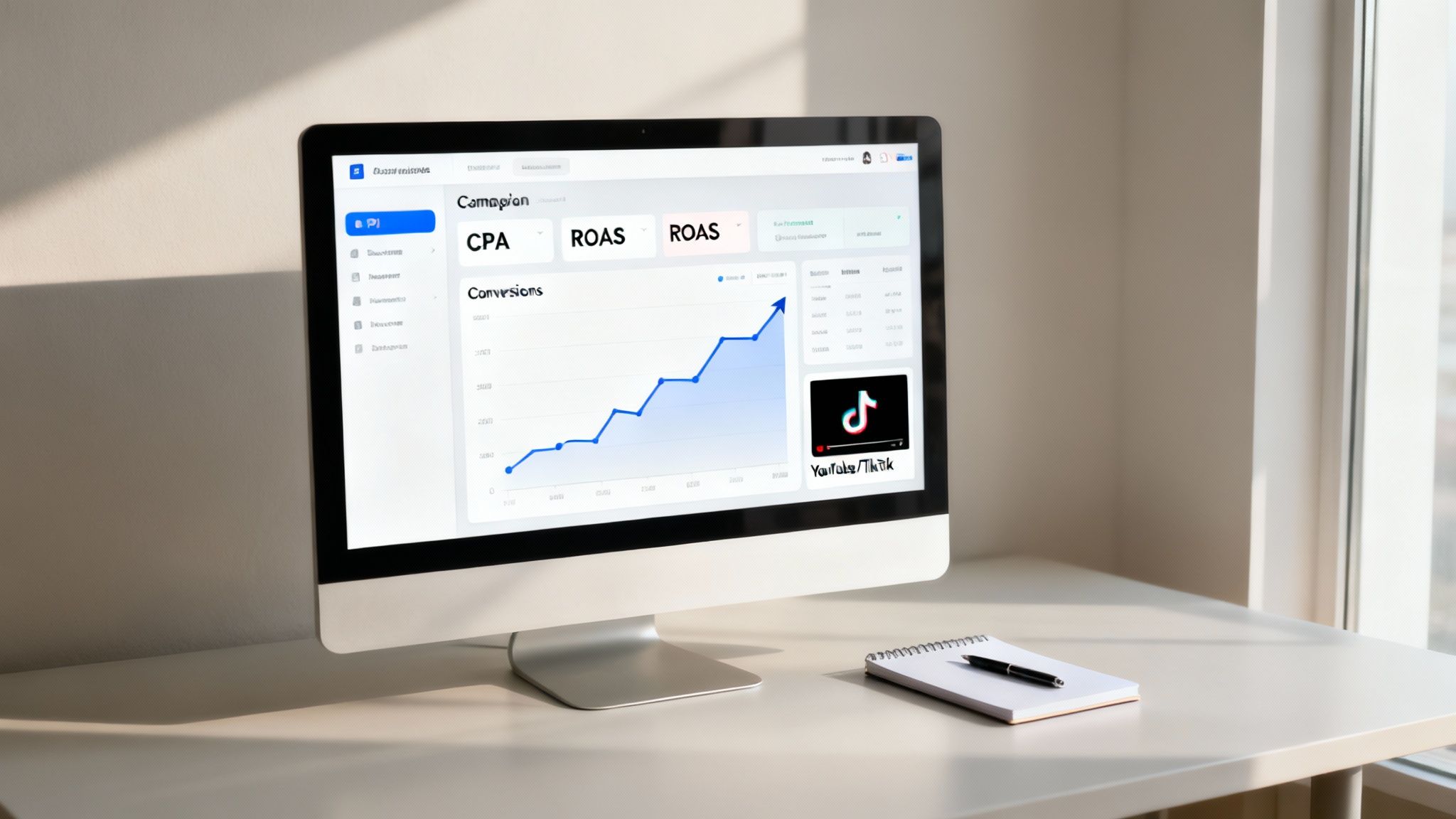
Getting your campaign live isn’t the finish line—it's just the start. The real work in pay-per-click advertising in Dubai, the part that separates the winners from the money-pits, is the daily grind of optimisation. This is where you adapt, evolve, and turn that initial trickle of data into a reliable engine for growth.
Successful campaigns are never static. They're living, breathing things that need to react to what your audience does and how the market shifts. For digital marketing agencies managing multiple PPC campaigns, this constant optimisation is a huge operational bottleneck. This is where frameworks like SMOrchestra's BOT Model come in. It allows you to build a high-performing campaign once, then turn it into a repeatable system, cutting delivery time by 60-80% for future clients.
Embracing Smart Bidding and Video Advertising
The PPC world in the UAE is moving fast. Machine learning-powered Smart Bidding isn't just a fancy option anymore; it’s practically essential. It looks at countless signals in real-time to bid higher for users who are more likely to convert, which is a massive advantage in Dubai’s fast-paced environment.
At the same time, video is absolutely exploding on platforms like YouTube and TikTok. Audiences in the UAE are incredibly receptive to interactive content, and we're seeing businesses get engagement rates up to 30-40% higher with video than with static images.
When you pair that with Meta Ads' typically lower CPCs—often 30-40% below Google's—you get a potent mix for driving serious returns. It’s not uncommon to see a Return on Ad Spend (ROAS) of 6:1 in many industries by blending these approaches.
Tracking What Actually Matters
Let's be clear: clicks are a vanity metric. What you really need to track are the actions that move your business forward. Leads. Sales. Phone calls. Bookings. Setting up solid conversion tracking isn't optional.
This means getting tracking pixels or code snippets onto your website to see what people do after they click. Without this, you’re just guessing, throwing money at keywords and ads without knowing which ones are actually making you money.
A few key tracking points to nail down:
- Form Submissions: Capturing every lead from your contact or enquiry forms.
- Phone Calls: Using call tracking to link calls directly back to your ads.
- E-commerce Purchases: Measuring revenue, transaction volume, and ROAS.
- Key Page Views: Tracking visits to crucial pages like a "thank you" or confirmation page after a conversion.
I see this all the time: a huge disconnect where the ad platforms and the website aren't speaking the same language. This leads to garbage data and, frankly, wasted ad spend. It's a fundamental problem that needs to be fixed before you scale.
Making sure your ads, emails, and website all work together seamlessly is the foundation of good tracking. You can learn more about why your ads and website aren't working together and how to fix it if you suspect you have this issue.
Interpreting Your Key Performance Indicators
Once your tracking is solid, you need to know which numbers to watch. It's easy to get lost in a sea of data. Focusing on the right Key Performance Indicators (KPIs) is what helps you make smart, decisive moves.
These are the metrics I live by for any Dubai PPC campaign:
Watching these KPIs lets you make strategic calls. Is your CPA creeping up? Time to tighten your targeting or test a new landing page. Is ROAS slipping? You might need to kill some underperforming ads and shift that budget to your winners.
To really dig into this, you can explore some proven strategies for Ecommerce PPC marketing. Remember, constant A/B testing of your ad copy, visuals, and landing pages is how you ensure your campaigns stay profitable and keep up with the market.
Answering Your Top Questions About PPC in Dubai
Jumping into pay-per-click advertising in a market like Dubai always stirs up a lot of questions. It's a unique place—incredibly dynamic, often expensive, and home to a truly diverse audience. It's easy to feel a bit intimidated.
Let's clear the air and tackle some of the most common things people ask. My goal here is to give you straight, practical answers so you can move forward with confidence.
What’s a Realistic Starting Budget for PPC in Dubai?
This is always the first question, and the honest-to-God answer is: it really depends on your industry and how aggressive you want to be. But that's not very helpful, is it? So, let's establish some real-world starting points.
For a small business just wanting to test the waters in a field that isn't hyper-competitive, a monthly ad spend of AED 3,000 to AED 5,000 is a sensible minimum. This gives you enough runway to gather meaningful data over a 90-day period. You'll figure out what's working before you even think about scaling up.
Now, if you're in a cut-throat sector like real estate, luxury retail, or specialised healthcare, you'll need to bring more firepower. A starting budget of AED 10,000 or more per month is often just the entry fee to get any real traction. The competition for the best keywords is just that intense, and a smaller budget will get steamrolled before it has a chance to deliver.
It's crucial to remember that these figures are for your ad spend alone. If you're bringing in a freelancer or an agency, you have to account for their management fees on top of what you're paying Google or Meta.
Should My Ads Be in English or Arabic?
The short answer? Almost always both. Thinking of a bilingual strategy as an optional extra in Dubai is a mistake. It’s a core requirement for reaching the whole market.
Here’s why:
- English is the common ground: With a huge expatriate community from every corner of the globe, English is the default language for business and day-to-day life. If you ignore it, you’re cutting yourself off from a massive piece of the pie.
- Arabic builds the connection: On the flip side, skipping Arabic means you’re failing to connect with UAE nationals and a huge chunk of the Arabic-speaking expat population. Advertising in Arabic isn't just about translation; it shows respect for the local culture and builds a level of trust that English-only ads often can't.
The best approach I've seen involves running separate campaigns or ad groups for each language. This lets you tailor everything—not just the words, but the visuals, the offers, and the landing pages—to the cultural nuances of each audience. For some brands aiming at a younger crowd, experimenting with "Arabizi" (Arabic written with English letters) on social media can be a surprisingly effective tactic.
How Long Does It Take to See Real Results from PPC?
You’ll start getting clicks almost immediately, which is great for instant feedback. But seeing real business results—like a steady stream of qualified leads and sales—takes time and a healthy dose of patience. Think of it as a marathon, not a sprint.
Here’s a rough timeline you can expect:
- Month 1: The Learning Phase. This first month is purely about data collection. The platform's algorithms are figuring out your audience, and you're getting your first look at how your keywords and ads are performing. You'll see traffic, but conversions will likely be few and far between.
- Month 2: The Optimisation Phase. By now, you should have enough data to start making smart moves. This is when you begin pausing the ads that are wasting money, shifting your budget to the winners, and tweaking your landing pages to improve conversion rates.
- Month 3+: The Scaling Phase. From the third month on, you should start seeing a much more consistent and predictable flow of leads or sales. This is typically when businesses start hitting a positive Return on Ad Spend (ROAS) and can confidently scale their investment.
It's so important to treat pay-per-click advertising in Dubai as a long-term play. The people who expect overnight success almost always get disappointed and pull the plug too early—often right before their campaigns were about to hit their stride. To get a better feel for how this all comes together, see how a digital marketing agency in Dubai builds a winning strategy from the ground up.
At SMOrchestra, we don't just run ads; we build predictable growth engines. We design, build, and operate unified sales and marketing systems that turn your ad spend into scalable revenue. Learn how we can create a high-conversion system for your business.

Read Our latest
Lorem ipsum dolor sit amet, consectetur adipiscing elit.