Think of a pro forma invoice less as a bill and more as a formal handshake before a deal is signed. It's essentially a preliminary invoice—a commitment from a seller to a buyer outlining the exact goods or services, at a specific price, before the final transaction goes through.
What Is a Pro Forma Invoice and Why It Matters in MENA
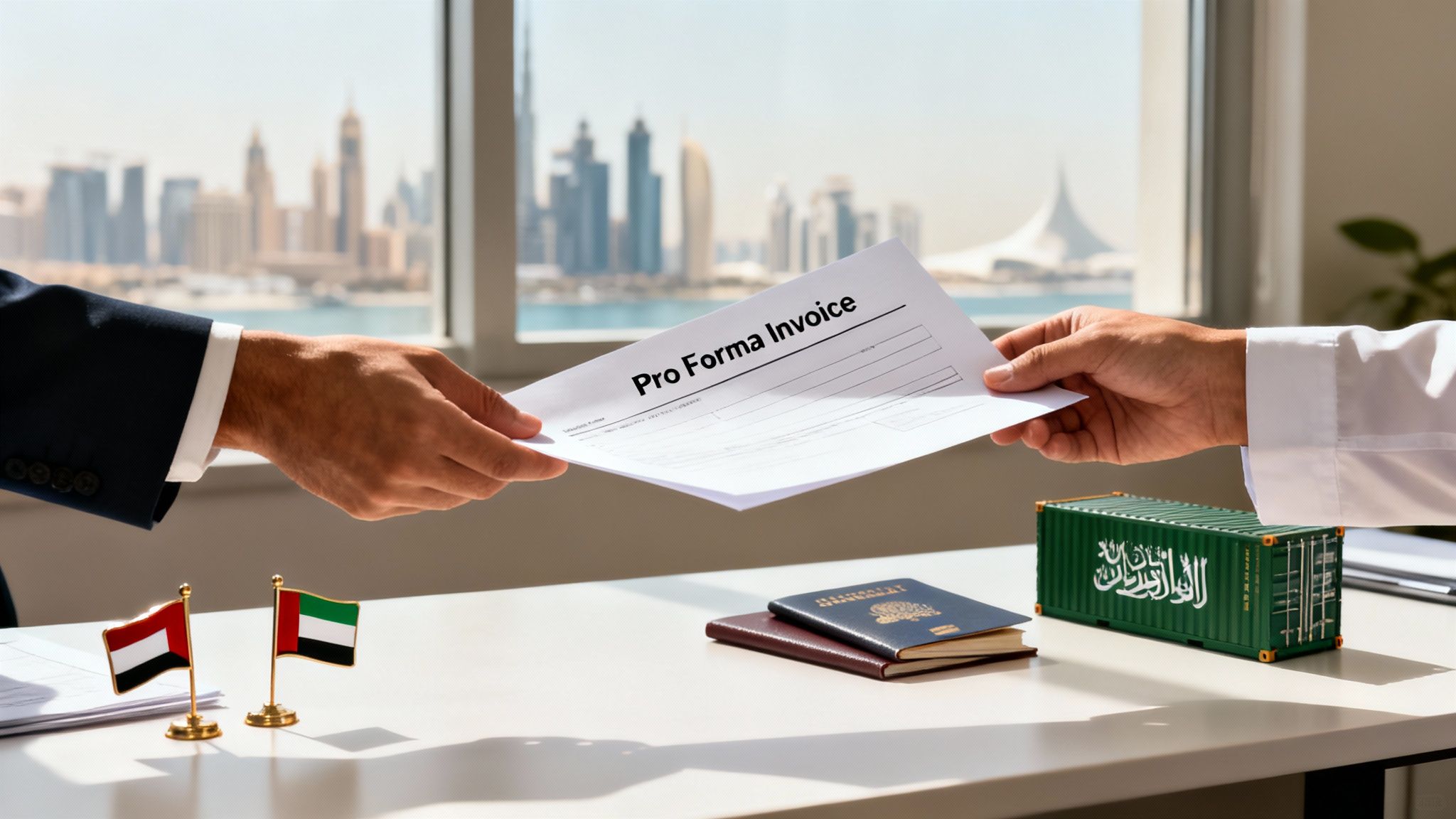
You can look at it as a super-detailed, professional price quote. While a basic quote might just give you a number, a pro forma gives you a complete preview of what the final commercial invoice will look like. It solidifies the terms and creates a "good faith" agreement between everyone involved.
For any business working in the UAE, Saudi Arabia, or the wider MENA region, this document is an absolute must-have. It’s a linchpin in both local deals and international trade, bringing clarity and formalizing intentions long before a single product is shipped or a service is delivered.
Its Role in Regional Business Operations
A properly drafted sample pro forma invoice is a workhorse, performing several jobs that are especially important in the Gulf's business culture:
- Securing Approvals: Buyers frequently use a pro forma to get the green light for internal budgets or to secure a letter of credit from their bank. It lays out all the necessary details financial institutions need to vet the deal.
- Facilitating Customs Clearance: When goods arrive at major ports like Jebel Ali in Dubai or Jeddah Islamic Port, customs officials demand meticulous paperwork. A pro forma invoice provides a clear declaration of the shipment's value, contents, and origin, which is crucial for avoiding expensive delays.
- Import Licensing: In some situations, a buyer must show a pro forma invoice to government bodies simply to get the necessary import licenses before they can even place the official order.
It’s also helpful in understanding the key differences between a receipt and an invoice, as the pro forma comes before both in the transaction timeline.
A pro forma invoice is not a legally binding contract for payment. You won't find it recorded in accounts receivable or payable because it's purely a declaration of intent. The terms are still on the table for negotiation until the final, legally binding commercial invoice is sent.
This built-in flexibility is key. It lets both the buyer and seller tweak things like quantities, pricing, or shipping details without the headache of voiding and reissuing a formal invoice. As more multinational corporations set up shop in the region, the demand for standardized, transparent documents like this only grows. It's all about ensuring smooth cross-border commerce. You can get a better feel for the operational side of MNCs in Dubai and the complex financial workflows they navigate.
Ultimately, the pro forma invoice is the foundational document that builds trust and sets the stage for a successful deal.
What Goes Into a Proper Pro Forma Invoice?

Putting together a pro forma invoice that actually works—whether for clearing customs or getting an internal sign-off—is about more than just plugging details into a template. It’s about creating total, undeniable clarity. Every single field has a job to do, and getting them right from the start is what saves you from expensive delays and frustrating mix-ups later on.
Think of it like the blueprint for the final transaction. A shaky foundation will cause problems down the road, but a solid, detailed plan ensures everything goes smoothly.
The Must-Have Identification Details
Right off the bat, your document needs to be instantly identifiable. That starts with a clear title and the right contact information.
"Pro Forma Invoice" Label: This is non-negotiable. The document must be clearly and boldly labeled "Pro Forma Invoice" right at the top. This simple act separates it from a legally binding commercial invoice and prevents any confusion about its purpose.
Seller and Buyer Information: You need the full legal names, physical addresses, and contact details for both your business (the seller) and your client (the buyer). Accuracy is everything here, as customs officials and finance departments often cross-reference this information with shipping manifests and import licenses.
A Unique Pro Forma Number: Each pro forma needs its own reference number. While it's not an official invoice number for your accounting books, it's essential for tracking conversations and revisions. A simple format like "PF-INV-" followed by a sequence (e.g., PF-INV-2024-051) works perfectly.
Key Dates: Always include the Issue Date (the day you created it) and, crucially, a Validity Date. This second date is your protection, clearly stating how long your quoted prices and terms are good for. It shields you from being locked into old pricing if your own costs go up.
Nailing the Transaction Specifics for the MENA Region
This section is the heart of the document—it's where you lay out the actual substance of the agreement. For any business operating in the UAE, Saudi Arabia, or the wider GCC, getting the region-specific details right isn't just a good idea; it's essential for smooth trade.
A classic mistake is leaving out tax details or delivery terms, thinking they can be sorted out later. For a customs officer in Jebel Ali or Jeddah, a missing TRN or unclear Incoterms is an immediate red flag that can trigger inspections and hold up your shipment for days.
To avoid this, you need to be meticulous with the following fields:
Detailed Description of Goods/Services: Vague descriptions like "Consulting Services" or "Clothing" won't cut it. You have to be specific: "Annual Subscription for CRM Platform, 10 User Licenses" or "Men's 100% Cotton Polo Shirts, Style #P451, Navy Blue." This level of detail is critical for accurate customs valuation.
Itemized Pricing: Break down every single cost. Show the quantity, the price per unit, and the total for each line item. This transparency doesn't just help the buyer see what they're paying for; it also makes their internal approval process much faster.
MENA Tax Information: If you're in the UAE, your Tax Registration Number (TRN) must be on the document. The same goes for VAT registration numbers in Saudi Arabia and other GCC nations. Including this shows you're compliant with local tax regulations from day one.
Delivery Terms (Incoterms): For physical goods, specifying the Incoterms (like EXW, FOB, or CIF) is vital. These globally understood terms spell out exactly who is responsible for the shipment, insurance, and customs at every stage of the journey. Getting this right prevents nasty disputes over who pays for what. It's an especially crucial detail for online stores, where logistics are a core part of effective e-commerce website design in Dubai.
Total Amount and Currency: Finish with a clear summary: the subtotal, any applicable taxes (like VAT), shipping charges, and the final grand total. And always, always specify the currency (AED, SAR, USD, etc.) to eliminate any chance of confusion.
To help you get it right every time, here’s a quick checklist of the essential fields your pro forma invoice should have to meet regional standards.
Essential Fields for a MENA-Ready Pro Forma Invoice
Making sure these fields are filled out correctly turns your pro forma from a simple quote into a powerful tool that accelerates your sales cycle and builds trust with your customers.
Download Your Sample Pro Forma Invoice Templates
Theory is great, but putting it into practice is what really counts. To help you hit the ground running, we’ve put together a few downloadable and editable sample pro forma invoice templates. These aren't just generic files; each one is built for common business types we see thriving across the MENA region.
You can grab them in either Microsoft Excel or Google Sheets, so they'll slot right into the tools you're already using. Forget building from scratch—just download, pop in your logo, and you’re ready to go.
B2B Services Pro Forma Template
This one is perfect for consultancies, SaaS companies, and digital agencies doing business in hubs like Dubai or Riyadh. The template is all about clearly itemizing services, laying out subscription terms, and defining project milestones. It’s structured to give corporate finance departments the exact kind of clarity they need before cutting a purchase order.
- Blank B2B Template: [Download Excel] | [Access Google Sheet]
- Completed B2B Example: [Download Excel] | [Access Google Sheet]
Our completed example walks through a real-world scenario: a Dubai tech firm sending a pro forma to a client in Saudi Arabia for software licensing and implementation. You’ll see exactly how to lay out the TRN, payment terms, and service details.
E-commerce Product Shipment Template
If you’re a D2C brand shipping goods across the GCC, this template is for you. It puts a heavy emphasis on the details that matter for customs clearance—think specific product descriptions, HS codes, country of origin, and Incoterms. Getting this right from the start is how you avoid expensive, frustrating delays at the border.
- Blank E-commerce Template: [Download Excel] | [Access Google Sheet]
- Completed E-commerce Example: [Download Excel] | [Access Google Sheet]
The filled-in version shows an e-commerce store in the UAE sending a package to a customer in Kuwait. It’s a practical look at how to list item values and shipping costs correctly to make the customs process a breeze. For a broader view, it's also smart to check out other samples of proforma invoice with free templates from trusted sources to expand your toolkit.
Clinic and Healthcare Services Template
We designed this one specifically for private clinics, dental practices, and other healthcare providers in the region. This sample pro forma invoice focuses on outlining treatment plans and their estimated costs for patients. It's an incredible tool for setting financial expectations before a procedure, which helps a ton with managing patient relationships and getting pre-approvals from insurers.
- Blank Clinic Template: [Download Excel] | [Access Google Sheet]
- Completed Clinic Example: [Download Excel] | [Access Google Sheet]
The example here shows a dental clinic in Jeddah giving a patient a pro forma for a cosmetic treatment that happens in stages, breaking down the cost of every visit and procedure.
Key Takeaway: Using a template isn't just about filling in blanks; it's about standardizing a critical business process. When you standardize, you cut down on errors, speed up your sales cycle, and show up looking professional to every single client.
Here’s a quick look at our Google Sheets template. Notice how it has clear, designated spots for all the critical information we've been talking about.
This clean layout makes it almost impossible to forget mandatory fields like your TRN or the specific currency, keeping your document compliant and easy for anyone to read.
Having everyone on your team use these templates is a great first step. The real magic, though, happens when you integrate this process into your main business systems. It’s worth taking the time to analyze your internal workflows to see where automation could make the biggest difference. For a deeper dive on that, you can learn how to build a gap analysis template to spot those operational weak points. This isn't just about creating documents; it’s about building a system that can actually scale with your business.
Navigating the Shift to E-Invoicing in UAE and Saudi Arabia
The days of emailing a simple PDF invoice and calling it a day are quickly ending in the Gulf. Governments across the region, especially pioneers like Saudi Arabia’s ZATCA (Zakat, Tax and Customs Authority) and the UAE’s Federal Tax Authority (FTA), are rolling out mandatory e-invoicing frameworks. This isn't just a minor policy update—it's a fundamental change in how business transactions are recorded and reported.
This shift is built around a model called Continuous Transaction Controls (CTC). Think of it this way: business documents, from invoices to even preliminary pro formas, must now be digitally generated in a standard format. In many cases, they even need to be pre-cleared through a government portal before you can send them to your customer. The goal is to create a transparent, real-time log of all B2B transactions to improve tax compliance and make trade smoother.
For businesses, this transition is a mix of big opportunities and urgent challenges.
The New Digital Mandate
The most important thing to grasp is that this isn't optional. These new rules require businesses to connect their accounting or invoicing software directly to government platforms. A traditional, manually created pro forma just won't cut it anymore; it simply doesn't meet the technical standards for validation.
The benefits are pretty clear:
- Fewer Errors: Automation slashes the human errors common in manual invoicing, which means fewer disputes and quicker payments.
- Greater Transparency: Tax authorities and trading partners get a much clearer and more immediate view of transaction details.
- Faster Trade: Standardized digital documents can be processed by customs and logistics partners way more efficiently, cutting down on port delays.
But for businesses that aren't ready, the challenge is very real. If you're still relying on separate spreadsheets or basic invoicing software, you'll find it impossible to operate legally. This makes switching to a modern, integrated system a top priority.
Why Digital Pro Formas Are Now Essential
Under these new e-invoicing regulations, even a preliminary document like a pro forma invoice has taken on a new level of importance. While it’s not the final tax invoice, it’s often the source of data for the commercial invoice that eventually gets submitted to the government portal. If the information on your pro forma is wrong or badly formatted, it will cause headaches all the way down the line.
Saudi Arabia is a great example of a country leading the charge here. By mid-2025, ZATCA's real-time e-invoicing mandate for all B2B transactions will be in full effect, meaning even pro formas will often need to be digitally prepared for pre-approval. Before these systems were in place, data showed that manual pro formas were to blame for 25-30% of all VAT reporting mistakes. The new integration rules are designed to drop that number to below 5%. You can dive deeper into the growth of regional e-invoicing on Business Market Insights.
This regulatory push forces businesses to think beyond simple templates. To stay compliant and competitive, you need systems that can create, manage, and send these documents electronically. Investing in the right tools is no longer about efficiency—it’s about survival. For help choosing the right platform, check out our detailed comparison of the best CRM for small business designed to handle these complex new rules. The right software turns a pro forma from a static document into a dynamic, compliant part of a modern digital workflow.
How to Automate Your Pro Forma Invoice Workflow
Let’s be honest: manually creating a pro forma invoice for every single potential sale is a killer of time and productivity. It's a classic bottleneck, an open invitation for human error, and it slows down your entire sales cycle. If you're looking to grow, moving beyond basic templates and spreadsheets isn't just a good idea—it's essential. The real goal is to weave pro forma generation directly into your sales process, making it an automatic reflex, not a manual chore.
Think about this scenario for a moment. A deal in your sales pipeline hits the "Quote Approved" stage. What if, at that exact moment, a perfectly compliant and professional pro forma invoice was automatically created, pulling all the correct details from the deal? And what if it was then instantly sent to your client through their preferred channel, like email or WhatsApp, without anyone on your team having to lift a finger? This kind of slick efficiency isn't just for massive corporations anymore.
Adopting a System-Based Approach
True automation hinges on having a central hub where all your customer, deal, and product information lives together. When your data is unified, you can build powerful "if-this, then-that" workflows. For instance: if a deal's status changes to 'Awaiting Down Payment,' then the system automatically generates a pro forma using your 'B2B Services' template and emails it to the main contact.
This approach brings some serious advantages to the table:
- Speed: You're cutting down the time it takes to send a pro forma from minutes—or even hours—to just a few seconds.
- Accuracy: Automation pulls data straight from the CRM record. This eliminates the kind of copy-paste mistakes that can easily derail a promising deal.
- Consistency: Every single pro forma that leaves your company looks professional and follows the same format, reinforcing your brand's image of reliability.
This flow diagram really highlights the shift from clunky, manual processes to the kind of streamlined digital systems that are now required.
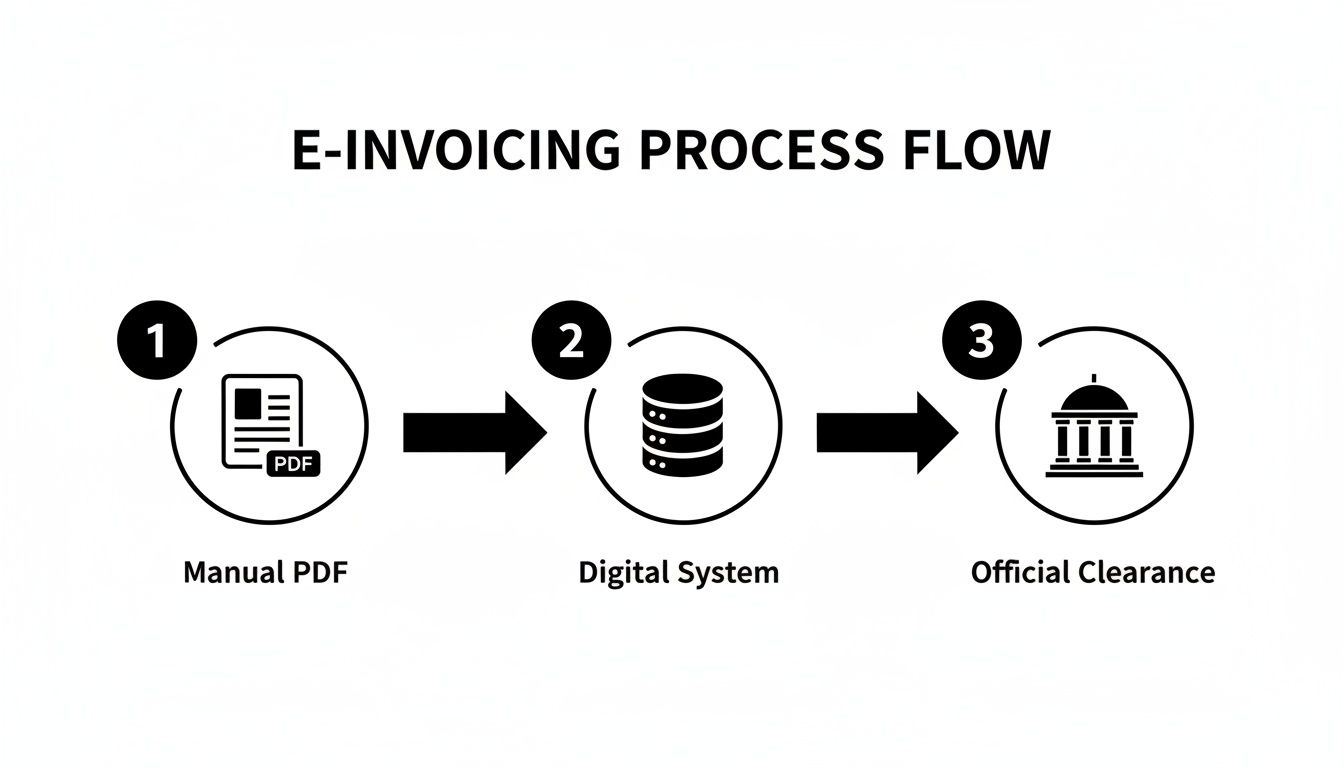
As you can see, just creating manual PDFs is a disconnected, outdated first step. A modern digital system is the critical bridge you need to achieve official clearance and stay compliant in today's fast-moving regulatory environment.
Leveraging Localized Tools for MENA Workflows
For SMEs, clinics, and B2B companies operating in the MENA region, a generic, one-size-fits-all CRM often misses the mark. This is where a localized platform can be a complete game-changer, built from the ground up to handle regional specifics like right-to-left text and WhatsApp-first communication.
A system that understands your market doesn't just automate tasks; it automates them in a way that resonates with your local customers. Sending a professionally formatted pro forma in Arabic via WhatsApp can significantly accelerate the sales process.
Take a system like SalesMfast AI, for example. It's a localized CRM alternative built for SMEs, B2B, clinics, and eCommerce. Because it was designed for the MENA market, it comes with Arabic templates, pre-built automation workflows, and systems baked in—no configuration needed. This allows you to automatically generate and send a compliant sample pro forma invoice directly from a deal, slashing your administrative burden.
This turns the pro forma from a tedious task into a powerful trigger that automatically moves deals forward. For any business aiming to set up similar systems, understanding the thinking behind a successful AI automation agency can offer great insight into building efficient, scalable workflows.
Ultimately, automating your pro forma process is about much more than just saving a bit of time. It's about creating a more polished and professional experience for your buyers, ensuring you stay compliant with regional e-invoicing laws, and freeing up your sales team to do what they do best: build relationships and close deals. By connecting this crucial step to your core sales system, you’re building a stronger, more scalable engine for revenue.
Common Pro Forma Mistakes That Cost MENA Businesses Money
Even the best pro forma template is only as good as the information you put into it. A tiny error might seem harmless, but it can quickly spiral into a shipment getting held up at customs, a payment dispute, or even a soured relationship with a valued client. In the MENA region, where customs and trade regulations are famously strict, these simple oversights can be especially expensive.
Think of this as your pre-flight checklist before sending that pro forma out the door. Steering clear of these common blunders will ensure your document helps move your deal forward, not bring it to a screeching halt.
Incorrectly Labeling the Document
This one sounds obvious, but it’s one of the most frequent and damaging mistakes we see. Calling the document a "Tax Invoice" or just an "Invoice" creates immediate confusion. It signals a demand for payment and gets logged incorrectly in your client's accounting system, creating a mess for both your books and theirs.
The Fix: Always, without exception, make sure the title is bold and clear: "Pro Forma Invoice." Those three words set the right expectation from the start. It tells everyone involved that this is a preliminary quote for agreement, not a final bill demanding payment.
Omitting Crucial Incoterms
If you're shipping physical goods, leaving out the Incoterms (International Commercial Terms) is like planning a road trip without a map—you're just asking for trouble. These globally recognized terms spell out precisely who is responsible for the shipment, insurance, and customs duties at every step of its journey. Skipping them leaves huge, expensive questions hanging in the air.
Imagine a container arriving at Jeddah Islamic Port. Is it your job or the buyer's to handle the import clearance fees? Without a specified Incoterm, nobody knows. That ambiguity leads to delays, mounting storage charges, and a flurry of panicked emails while your goods are stuck in limbo.
The Fix: Always include a specific Incoterm like FOB (Free On Board) or CIF (Cost, Insurance, and Freight). This instantly clarifies who pays for what and when, preventing nasty surprises and arguments over logistics costs down the line.
Using Vague Product Descriptions
Customs officials at busy ports like Jebel Ali thrive on clarity. When they see a pro forma with a line item like "50 units of electronic components," red flags go up immediately. Vague descriptions invite extra scrutiny, manual inspections, and potential rejection of your shipment.
This has been a persistent headache in the region. Before 2025, a massive 90% of the order-to-cash process in many African and Middle Eastern markets was paper-based. This old system, which required perfectly detailed pro formas, was a major bottleneck. Minor discrepancies were responsible for delaying an estimated 65% of B2B shipments for everyone from e-commerce sellers to clinics. You can find more details about the shift to digital in this guide to e-invoicing models on pagero.com.
A customs officer's job is to verify, not to guess. A pro forma that is unclear or incomplete makes their job harder and guarantees your shipment will be moved to the back of the queue.
The Fix: Be hyper-specific. Don't just write "electronic components." Instead, describe it as "50 units of Model X45 Voltage Regulators for industrial machinery, Country of Origin: Germany." This level of detail gives customs everything they need to classify the goods correctly, which speeds up clearance. Taking a few extra minutes to double-check these details turns your pro forma from a potential problem into a powerful tool for smooth, hassle-free trade.
Your Pro Forma Invoice Questions, Answered
Alright, let's tackle some of the common questions that pop up when you start working with pro forma invoices in your day-to-day business.
Is a Pro Forma Invoice a Legally Binding Contract?
In short, no. Think of a pro forma invoice as a "good faith" estimate or a very detailed quotation. It lays out the terms of a potential sale, but it doesn't legally lock the buyer into paying or you into delivering.
Its real job is to get everyone on the same page before the deal is sealed. The document that actually requests payment and carries legal weight is the commercial or tax invoice, which comes after the sale is confirmed.
Can a Pro Forma Invoice Be Changed?
Absolutely. Since it's not a binding agreement, changes are a normal part of the process. If your client wants to adjust the quantity, or you need to update shipping costs, you just issue a new pro forma invoice with a fresh validity date.
A great tip is to keep the same pro forma number but add a revision marker, like PF-2024-101-Rev1. This creates a clean, easy-to-follow paper trail of your negotiations.
What Is the Difference Between a Pro Forma, Quote, and Invoice?
While they can feel similar, each one plays a specific role at a different stage of your sales process.
Do I Include VAT on a Pro Forma Invoice in the UAE?
Yes, you definitely should. Including the estimated Value Added Tax (VAT) gives your buyer a complete and accurate picture of the total cost they can expect. Just remember, they can't use this document for any official VAT reclamation.
This is all becoming even more critical with mandatory e-invoicing on the horizon. Starting in July 2025, the UAE's Federal Tax Authority (FTA) will require VAT-registered businesses to issue digital pro formas through compliant systems. This is part of a massive regional shift toward e-invoicing, a market expected to hit US$2,087.30 million by 2031. You can read more about the upcoming e-invoicing changes on sharedserviceslink.com.
At SMOrchestra, we specialize in helping MENA businesses leave manual documents behind. We build automated sales and marketing systems that manage the entire journey, from capturing a lead to receiving the final payment. Discover how our AI-driven frameworks can systematize your growth.

Read Our latest
Lorem ipsum dolor sit amet, consectetur adipiscing elit.